‘Jim Crow Creek’ Information

Brief overview of evidence about the name ‘Jim Crow’ Creek

Professor Barry Golding AM

 b.golding@federation.edu.au

This is a very brief summary of what we know from the historical record about the origins and racist connotations associated with the naming of ‘Jim Crow Creek’ in the Central Goldfields of Victoria during the early 1840s.

A longer version with sources is also available by following this link, JemCrowAugustBG2019

I have added these documents to help inform the public about how our ‘Jim Crow Creek’ got its name, and to provide evidence that I believe argues for a process leading to a future name restoration.

Our local traditional owners, the Dja Dja Wurrung Aboriginal Nation, have requested that the offensive and racist name be changed for this significant, life-giving feature of their generously shared traditional lands.

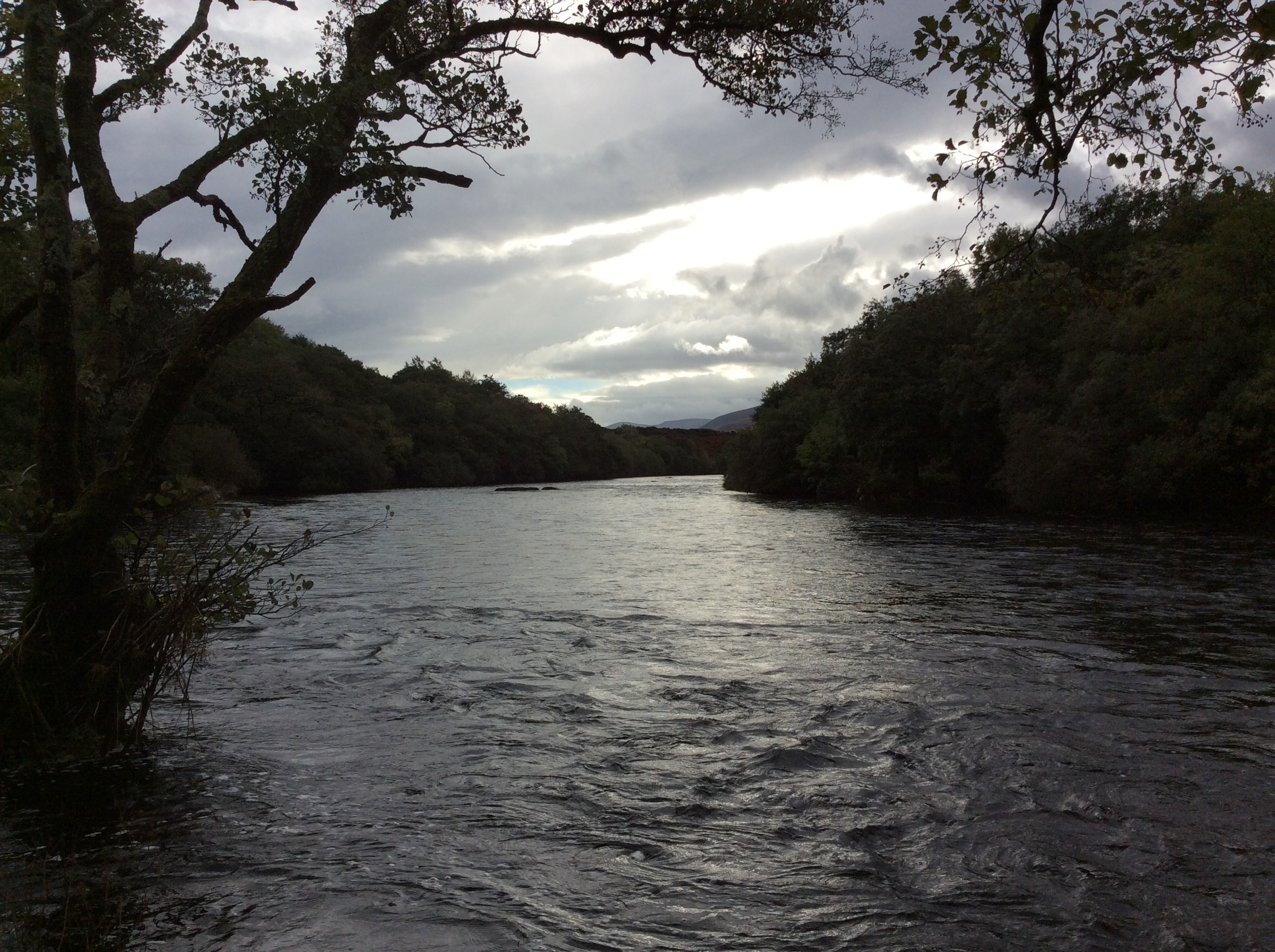
‘Jim Crow Creek’ is a 26km long ephemeral creek, draining 123 square km of country, formed by the confluence of Sailors Creek and Spring Creek at Breakneck Gorge in Hepburn Regional Park, two kilometers north-west of Hepburn. A Streamside Reserve near Franklinford also shares the same name.

The creek flows in a northerly direction from steep, forested gullies to undulating grazing land and alluvial flats where it enters the Loddon River below the Guildford Plateau at Strangways, 8 km downstream of Guildford. As with other significant features in the local landscape, it had a previous Dja Dja Wurrung name.

The name ‘Jim Crow’ was likely first given to the mountain (previously known as Lalgambook,now called Mount Franklin) by squatter John Hepburn (or less likely Alexander Mollison) after April 1838. Its crater and the areas around it was also called Larnebarramul(literally ‘nest of the Emu’).

Later the creek, district, goldfield and, at times, the Aboriginal Protectorate, ‘Tribe’ and individual Aboriginal people were also called ‘Jim Crow’.

Part of Mollison’s run was called ‘Jumcra’ from 1840, on land that later become the Loddon (Mount Franklin) Aboriginal Protectorate from 1841.

Edward Parker, local ‘Protector of Aborigines’ used the term ‘Jim Crow’ Hill when referring to the mountain in his 22 September 1839 report.

‘Jim Crow’ was a widely used and racist, derogatory term used to describe black, mostly enslaved people in America in the 1830s.

A popular and catchy song ‘Jump Jim Crow’, sung in the 1830s by a black-faced US white minstrel negatively caricatured a clumsy, dim-witted slave. It became a huge hit with audiences worldwide.

An English poem similarly adopted and disseminated the US ‘Jim Crow’ theme to the British and colonial public from 1837. Called ‘The Jackdaw of Rheims’, it created a modern fable about how the crow (jackdaw) got its name ‘Jem Crow’. Again, the main character is a persecuted and dishevelled black crow.

The second last line of poem, above, makes clear, that empires, invaders and conquerors routinely bestowed new names on old geographical features.

George Robinson, ‘Chief Protector of Aborigines’ diary (14 Feb, 1840) noted ‘… a hill Mr Hepburn calls Jem Crow … on account of the small hollows about it’.

John Hepburn was previously a widely travelled international sea captain, including to the US. Like Mollison, by 1840 he would have been well aware of its racist connotations and familiar with both the popular song and poem.

The Jim Crow character in the song transferred to the now repealed ‘Jim Crow Laws’ that became part of several US state constitutions. The Jim Crow Lawsmandated the segregation of public schools, public places, public transportation, the segregation of toilets, restaurants, and drinking fountains for whites and blacks, in place from 1877 to the 1950s in the US. Understandably, in 2019 use of the term ‘Jim Crow’ is very offensive in the US.

The name of a former ‘Jim Crow Mountain’ and National Park near Rockhampton in Queensland was legally restored to Bagain Queensland in 2018 in collaboration with the Darumbal Aboriginal people and the local community.

There are other instances in Australia where similarly racist and offensive place names, such as ‘Nigger Creek’ have been officially expunged in consultation with the community and traditional owners as part of Indigenous reconciliation.

The Hepburn Shire and Mount Alexander Shire are actively engaged and supportive, with the traditional owners, in initiating a Reconciliation process to lead towards restoration of a more appropriate Dja Dja Wurrung name for the Jim Crow Creek.

‘Reading the Country at Contact’, Basic NAIDOC Tour Notes, 26 May 2019

Grounded in Truth: ‘Reading the Country at Contact’ Tour

Hepburn Shire Reconciliation Action Plan  (RAP) Tour Notes

A National Reconciliation Week 2019 Activity

Sunday 26 May 2019, 8.45am-4pm

National Reconciliation Week (NRW) is a time for all Australians to learn about our shared histories, cultures, and achievements, and to explore how each of us can contribute to achieving reconciliation in Australia. At the heart of reconciliation is the relationship between the broader Australian community and Aboriginal and Torres Strait Islander peoples. To foster positive race relations, our relationship must be grounded in a foundation of truth.

Join Adjunct Professor Barry Golding, and Dja Dja Wurrung Elder, Uncle Ricky Nelson for this one-day bus tour.

This tour invites you to experience a range of important sites in the Dja Dja Wurrung landscape where there is evidence of contact from the late 1830s between the peoples of the Dja Dja Wurrung Aboriginal Nation and the invading pastoralists, including John Hepburn, after whom the Shire is named.

There are seven stops, some as short as 20 minutes total time off the bus, so please follow instructions on the day to unsure we get to see all we planned. Most of our stops are on roadsides. To remain safe, please stay on the LEFT side of the road off the bitumen at each of these stops

ARRANGEMENTS: Registered participants will meet outside Daylesford Secondary College, Smith Street, Daylesford at 8.45am for departure no later than 9.00am. There is safe car parking outside the school. These tour notes with a route map (superimposed on an 1840s sketch map as well as an 1847 survey  map) will be provided on the bus. The tour notes prepared by Barry Golding that form the basis of the narrative during the tour will be posted after the tour in a ‘Reading the Country at Contact’ blog at www.barrygoanna.com

The two buses will return back to the starting point by 4.00 pm. We will visit, pass through or hear about a wide range of immediate post-contact sites that were significant between 1836 and 1841 in the Franklinford, Guildford, Strangways, Newstead, Neereman, Joyce’ Creek, Glengower, Campbelltown, Smeaton Plain, Smeaton, Kooroocheang and Kingston areas.

NOTE: All of what we see is on roadsides, ‘seen through the fence’, or in some cases with generous, one-off permission from landholders. Gaining permission for private entry on tours like this is a rare privilege.On no account should participants later trespass with others on private property or later contact private landholders to seek out what we look at from a distance.

PLANNED ITINERARY  (Please help us to keep to time …)

  • Board buses from 8.45am, Daylesford Secondary College, Smith Street.
  • Sharing of reasons for coming on the tour and expectations: on the bus.
  • 00am: Depart, travel towards Castlemaine, pass Mt Franklin (Lalgambook, withLarnebarramul volcaniccrater) to right; PASS second Protectorate site, June 1841-Dec 1849 to left).
  • PASS the Lime Kiln (on left), operating in the 1840s, supplied lime for John Hepburn’s House via the ‘Limestone Road’
  • Stop 1:30am: arrive at The ‘Big Tree’, Guildford, John Hepburn and family passed through here, April 1838.
  • 30 to 10.15am: Welcome to Country & Smoking Ceremony, Dja Dja Wurrung Elder Uncle Ricky Nelson; Welcome by Hepburn Shire Mayor, Don Henderson. Toilet available opposite the Big Tree.
  • Stop 2:45am-11.05am:The Loddon Valley at Strangways (considered but rejected as a Protectorate site, early 1841).
  • 15am brief Toilet Stopin Newstead & ‘Morning Tea’.
  • Stop 3:35am-12.00pm: The ‘Major’s Line’ October 1836 crossing on the Loddon at Newstead (later the Gold Escort route to Adelaide): Roadside stop opposite Mount Tarrengower, view towards Gough’s Range (Robinson & Parker reconnaissance trip, Feb 1840) and Neereman (Nov 1840-June 1841 Protectorate Site: 6km beyond Baringhup.
  • Stop 4:15am-12.35pm: Roadside stop above Joyce’s Creek opposite Moolort Plains, near remnant Buloke (Casuarina) trees to discuss the nature and importance of places where different ecosystems intersect.
  • Stop 5:55pm-1.25pm White Graves, the first burial associated with the 1840 Middle Creek Massacre, 1 km south of Campbelltown on Strathlea Road; narrative about Middle Creek, The Bloodhole’ 1840 massacre site..
  • 35pm brief Toilet Stop, Campbelltown Hall.
  • 45pm: PASS Aboriginal oven mounds (right) in private property woodland beyond Campbelltown fire station.
  • Stop 655pm-2.30pm: Roadside Lunch, Red Gums, Smeaton Plains, Williams Road, ‘A favourite place for the Aborigines’, described by G. A. Robinson in Feb 1840.
  • 40pm: PASSformerKooroocheang Swamp [private] (on right).
  • Stop 7:50pm-3.20pm: Hepburn Family Private Gravesite, off Estate Lane, below Mount Kooroocheang, [NB: Smeaton House is a private residence].
  • 3:30pm-3:40pm:Toilet Stop Smeaton Reserve
  • 40pm depart for Daylesford Secondary College, arrive by 4.00pm.

Map 1: March 1840 Edward Parker Rough Sketch Map, from E. Morrison, Frontier Life in the Loddon Protectorate, 1967, p.19. Most are pre 1840 sheep runs established mainly on the Coliban and Campaspe on Dja Dja Wurrung. When Parker drew the map he was likely unaware of the main branch of the Loddon. The ‘Polodyul or Loddon River’ shown is likely the stream called ‘Jim Crow Creek’ in 2019. Our tour route is marked in pink.

Parker Sketch Map 1840

MAP 2:  Main 1847 Base Map: copied from inside cover of ‘A Homestead History’(Reminiscences of Alfred Joyce 1843-64, Ed. G. James, 1942), redrawn from an 1847 Upper Loddon survey Map,

Upper Loddon Map 1847 (annotated 2019)

  • Our tour route is marked in pink; present day ‘towns’ in green; 2019 creek, river and mountain names added.
  • RUNS: Smeaton Hill(John Hepburn, from 1838); Glengower(Dugald McLachlan, from 1839); Plaistow (Alfred Joyce from 1843); Tarringower (Lauchlan McKinnon, 1839-41); Rodborough Vale (Thomas Chirnside 1839, Donald McKinnon then E. G. Bucknall from 1844); Boughyards (Alexander Mollison from 1837, Alexander Kennedy from 1840).
  • Note how quickly things had changed in the footprint of the current (2019) Hepburn Shire between 1840 and 1847.

Mitchell ‘discovers’ Dja Dja Wurrung’s Australia Felix


Mitchell passed twice through Dja Dja Wurrung country in Winter and Spring of 1836. This account focuses on the implications of Mitchell ‘discovering’ the highly productive, carefully created, and responsibly managed Dja Dja Wurrung grasslands, that he otherwise took to be empty and ripe for subsequent picking by European invaders.

NOTE: Much of my account was added on 24 September 2018 to my much longer and wider historical and autoethnographic narrative on the ‘Beyond Contact’ page.

Major Thomas Mitchell’s 1836 traverse across what is now inland Victoria is important as part of the wider historical narrative by virtue of being the first European to describe and give (mostly new European) names to most of the inland rivers and mountains of northern and Western Victoria, including those rivers already mapped, named and cultured by Dja Dja Wurrung peoples for around one thousand generations.

Mitchell’s diary, published in Three expeditions into the interior of Eastern Australia; with descriptions of the recently explored region of Australia Felix and the present Colony of New South Wales, records his 1836 overland expedition of ‘exploration’ from Sydney via the Murray River then south to Portland, returning via Western Victoria and present day north eastern Victoria.

While Mitchell made some notes about the local traditional owners he encountered, his main interest was in describing, naming and ‘opening up’ a country’ he regarded as essentially uninhabited. That said, his 25 man official party including his second in command, G. C. Staplyton carried a total of 36 firearms. The men were dressed in red woollen shirts and grey trousers crossed by white braces, ‘giving the men somewhat of a military appearance’ (p.2) as they set off, in Mitchell’s words, ‘to traverse unexplored regions, peopled, as far as we know, by hostile tribes’ (p.3).

The expedition anticipated using boats along and in order to cross some larger inland streams including the Murray and Darling Rivers, which they carried in a boat carriage. The several heavy wagons left their wheel ruts discernable for several decades after their expedition. The track the wagons followed was often already an Aboriginal highway, and the expedition’s track across Victorian’s northern plains quickly followed by squatters, sheep and cattle later became known as the ‘Major’s Line’.

Twice during this 1836 expedition Mitchell passed through Dja Dja Wurrung country, twice crossing the Loddon River. The first traverse and river crossing was in mid winter (late June and early July, 1836) whilst heading southwest between Pyramid Hill and the headwaters of the Richardson River. The second time the expedition crossed the Loddon River near present day Newstead in late September 1836, on router between Mount Cole and Mt Alexander as the expedition was heading back towards Sydney. Mitchell named what is now known as Mount Alexander (to the Dja Dja Wurrung, Leanganook) ‘Mount Byng’, though the name did not stick. Admiral John Byng, an English Royal Navy officer was court-martialed and shot dead by a firing squad in 1757.

Unlike Chief Protector of Aborigines, George Robinson, Mitchell not only took the country to be uninhabited but also prepared and predestined for European intrusion by a then unknown cause. Mitchell came close to identifying the then unknown explanation for such extensive areas of open grassland on what later became the heavily grazed and cultivated plains of northern and western Victoria when he wrote that:

On highest mountains and in places the most remote and desolate, I have always found every dead trunk and the ground and any living tree of any magnitude also, the marks of fire; and thus it appeared that these annual conflagrations extend to every place. (p.328)

What Mitchell described were grassland, woodland and forest ecosystems carefully and deliberately created and managed by thousands of years of regular and systematic Aboriginal burning to encourage and sustain their desired food plants and animals.

On 30 June 1836 Mitchell was towards the north end of Dja Dja Wurrung country when he climbed to the top of Pyramid Hill and described:… a land so inviting, and still without inhabitants! As I stood, the first European intruder on the sublime solitude of these verdant plains, as yet untouched by flocks or herds; I felt conscious of being the harbinger of mighty changes; and that our steps would soon be followed by the men and the animal for which it seemed to be prepared’ (p.159).

The ‘fine plain’ Mitchell and his wagons passed across the next day was covered with what both he and Robinson called anthisteria, now known as Themeda triandra, ‘Kangaroo’ or ‘Oat’ grass, also covered in places by what Mitchell recognised as banksia and casuarina, and what Robinson respectively called ‘honeysuckle’ and ‘oak’. By July 5 they passed a lofty hill Mitchell recorded as Barrabungale (likely present day Buckrabanyule, unbeknown to Mitchell the sacred home of the feared ancestral giant serpent, Mindi). By July 6 the party were on a river Mitchell named the Loddon, because ‘… of its resemblance in some respects to the little stream in England.’ On July 10 they crossed and named the Avoca River, and on 13 July crossed and named the Richardson River after his botanical collector, John Richardson, who had an unplanned swim when his horse slipped during the river crossing. By July 19 they has encountered another river they ascertained from the locals to be the Wimmera.

By late August 1836 the expedition had passed north of (and renamed) Gariwerd the Grampians, and travelled along the Glenelg River, launching their whaleboat to explore the wide and navigable lower parts of the river. They came onto the southern Australian coast downstream of present day Nelson close to the present day South Australian-Victorian border. On 29 August Mitchell’s party was ‘astonished’ when one of the expedition’s Aboriginal members (not listed but invaluable amongst the ‘official’ expeditioners) whom Mitchell called ‘Tommy Came-last’ came to him with the unexpected news of fresh cattle tracks, the ‘shoe marks of a white man’, ‘portions of tobacco pipes and a glass bottle without a neck’. Mitchell understood that whalers and sealers had for several decades made camp along the same stretch of coast on Portland Bay, but the presence of cattle tracks astounded him. In Mitchell’s words, ‘How cattle could have been brought here I did not understand’. At anchor in the bay they found the answer: ‘The Elizabeth of Launceston’ and on shore ‘a considerable farming establishment belonging to Messrs. Henty’ that had been in place for at least two years. Mitchell wrote that Henty ‘was ‘importing sheep and cattle as fast as vessels could be found to bring them over’ (p.241).

The return journey towards Sydney took the party south of the Grampians, and apart from Mitchell’s personal side trip to climb and name Mount Macedon, on a steady north-east bearing across the ‘open downs’ of the Western District volcanic plains. The expedition re entered Dja Dja Wurrung country as they crossed the Great Dividing Range between Mount Cole and Mount Greenock (close to present day Talbot), both of which Mitchell renamed. Mitchell’s wagons skirted the base of Mount Greenock and headed northeast towards the open volcanic plains north of present day Clunes towards present day Newstead on a compass bearing of 60.5 degrees. The intention was to head for ‘Mount Byng Pass’, effectively at the south end of Mount Alexander that had been in the expedition’s sights on the horizon for several days. The dozens of smooth, grassed, breast-like volcanic hills visible to the east of the summit of Mount Greenock Mitchell called the Mammeloid Hills. On 25 September 1836 as the party lumbered across this vast Aboriginal grassland, Mitchell wrote: ‘In travelling through this Eden, no road was necessary, not any ingenuity in conducting wheel carriages wherever we chose’ (pp.276-7).

As the party headed north-east onto the open grassy plains, Mitchell climbed a nearby ‘smooth round hill’, likely what later became known as Mount Cameron, to get the lay of the land and try and map the course of the many small northward flowing streams. Mitchell’s party:

… entered on a very level and extensive flat, exceedingly green and resembling an English park, bounded on the east by a small river flowing to the north-west (probably the Loddon) and abrupt but grassy slopes beyond its right bank.

 Mitchell’s was correct in assuming it was the Loddon, the same river he had crossed around 100km north approximately three months earlier. Mitchell’s description on 28 September puts the party close to present day Newstead and heading through belts of forest and grassland towards present day Castlemaine. On 29 September the party found a route through the steep wooded ranges for their wagons, down onto the ‘more open granitic country at the foot of Mount Byng [Mount Alexander]’ near present day Chewton, naming it ‘Expedition-pass’. Mitchell was confident ‘that such a line of communication between the southern coast and Sydney, must, in the course of time, become a very considerable thoroughfare’.

At this point, at the foot of Mount Alexander, whilst waiting for repairs to the wagon carrying their boats, Mitchell resolved to take a side trip from his wagon train ‘to the lofty mountain mass which appeared about thirty miles to the southward’ (p.281). From this mountain, that Mitchell called Mount Macedon after Philip of Macedon in honour of the fact that he was able to view Port Philip from the summit, he could see signs of European activity at the Port Phillip settlement in the form of ‘white objects which might have been either tents or vessels’. Port Phillip had been briefly settled near Sorrento on 1803-4, then left mostly undisturbed by Europeans until the previous year, 1835, when settlers from Tasmania led by John Batman and John Pascoe Fawkner (who incidentally had been at the Sorrento settlement as a child) established what became Melbourne on the lower reaches of the Yarra River.

On the return journey towards Sydney across what are now the northern plains, Mitchell went ahead to ensure he was first with the news of his discovery of Australia Felix, ‘the better to distinguish it from the parched deserts’ that Mitchell ‘had wandered so unprofitably, and for so long’ in Western New South Wales. Mitchell wrongly took this Eden wrongly to be ‘still for the most part to be in a state of nature providing a fairly blank sheet’ for subsequently being carved up by European towns and lines of communication. The expedition’s return route approximated the current Hume Highway, fording the Goulburn River near present day Mitchelton and the Murray River near present day Albury. Mitchell buried letters of instruction to Staplyton who followed behind him with the wagons. As Hawdon along with Gardiner and Hepburn were heading south on the first ever overland journey with herds of sheep and cattle towards Port Phillip in late 1836, they encountered Stapleton who was also crossing the Murrumbidgee River near present day Gundagai on his way back to Sydney.

Danish and Icelandic Men’s Shed update August 2018

Mænds Mødesteder (‘Men’s Sheds’) in Denmark

 Background

Men’s Health is formally acknowledged as an issue in Denmark in the first official report on Men’s Health In Denmark, titled ‘Men’s health: The health status of men in Denmark and a review of effective interventions for promoting men’s health.

Mænds Mødesteder (in Danish, effectively ‘Men’s Meeting Place’) is an initiative of the Forum for Maends Sundhed (Men’s Health Society), Denmark. The Society is a multidisciplinary organisation dedicated to the field of men’s health in all its aspects. The Society is a member of ‘European Men’s Health Forum’ (EMHF) and ‘Global Action of Men’s Health’ (GAMH).

When The Men’s Shed Movement book was published in 2015, only one ‘Men’s Shed ‘(Mænds Mødesteder, Stevns, opened April 2015) was listed. Mænds Mødesteder are still growing in Denmark. To date (August 2018) there are approximately 30 open or soon to open and most have their own website. Each ‘Shed’ that wants to have a site can post activities and write about their shed or add pictures. The site is www.mmdanmark.dk. On this website you also can see the guidelines for any municipality or other interested organisation that wants to open up a Mænds Mødesteder https://www.mmdanmark.dk/wp-content/uploads/2018/06/M%C3%A6nds-M%C3%B8desteder-drejebog-nettet.pdf

Sincere thanks to Mie Møller Nielsen Head of Office (Head Office, 74, 3.sal
1620 København, see 
www.sundmand.dk) based in Copenhagen, Denmark for the updated information below.

Mænds Mødesteder in Denmark
 to August 2018

At the moment there are approximately 30 Mænds Mødesteder open or soon to open Below is a list by year of where and when a Mænds Mødesteder has opened in Denmark (or is soon to open, to August 2018) since the program started in 2015.

2015: 7 opened, one has since closed

2015 Feb.          Mænds Mødesteder – Sjakket Bornholm

2015 April         Mænds Mødesteder – Billund
2015 April        Mænds Mødesteder – Stevns

2015 April         Mænds Mødesteder – (Trige, Frydenlund og Herredsvang, Vandtårnsområdet i Aarhus)

2016: 11 opened, 2 have since closed

2016 Feb.         Mænds Mødesteder – Skaldborg Mandeklub Aalborg

2016 March     Mænds Mødesteder – Odsherred

2016 April        Mænds Mødesteder – Bryrup

2016 June        Mænds Mødesteder – Horsens(closed)

2016 June        Mænds Mødesteder – Glostrup

2016 Aug         Mænds Mødesteder – Høje-Taastrup(closed)

2016 Sept         Mænds Mødesteder – Brøndby

2016 Sept         Mænds Mødesteder – Kjellerup

2016 Oct          Mænds Mødesteder – Sønderborg

2016 Nov        Mænds Mødesteder – Greve

2016 Nov         Mænds Mødesteder – Ringsted

2017: 7 opened

2017 Jan          Mænds Mødesteder – Esbjerg

2017 Feb          Mænds Mødesteder – Tårnby

2017 Feb          Mænds Mødesteder – Frederiksberg

2017 May         Mænds Mødesteder – Egedal

2017 Sept        Mænds Mødesteder – Korsør

2017 Sept        Mænds Mødesteder – De Fynske Alper (Faarborg-Midtfyn)

2017 Nov         Mænds Mødesteder – Silkeborg

2018: 4 opened to August (3 in development*)

2018 Feb          Mænds Mødesteder – København N.

2018 March     Mænds Mødesteder – Rebild

2018 April        Mænds Mødesteder – Pusterummet (Holstebro)

2018 May         Mænds Mødesteder – Farvskov

*2018                  Nørresundby (Aalborg)

*2018                  Randers

*2018                  Haslev (Faxe)

We don’t know exactly how many men (in total) are using the Mænds Mødesteder, but we expect it to be around 700 men. There now is a Mænds Mødesteder in every region in Denmark, and 22 out of 98 municipalities has a Mænds Mødesteder in Denmark, with some municipalities already having more than one.

Karlar í skúrum ‘Men’s Sheds’ in Iceland

Men’s Sheds in Iceland is a project of the Icelandic Red Cross. Karlar í skúrum is a direct translation into Icelandic from ‘Men´s Sheds’ or ‘Men in Sheds’. They have started one Shed which now has 30 members and a waiting list has started to form. All the information about Men´s Sheds in Iceland accessible on line is in Icelandic. Therefore this brief English update.

There was a formal opening gathering on 1 June 2018 and Barry Sheridan, CEO from the Irish Men’s Sheds Assocation came across from Dublin and attended the opening. There was some coverage on national television and Barry was interviewed: see http://www.visir.is/k/vtv44af3779-4bb5-40a6-9587-86985a78f22e Also, there was article about the opening in a national paper: scroll down to the article on page 24 of the following link: http://www.visir.is/paper/fbl/180606.pdf

Sincere thanks to Hörður Sturluson, Project Manager, Icelandic Red Cross [ email hordur@redcross.is]. Hordur would welcome any feedback globally ‘… about the best way to make Sheds be sustainable by themself. We are planning to start some more Sheds and there is interest around the country. Does anyonehave any documents about that?

Creswick Shire Hall, Kingston

Creswick Shire Hall in Kingston

 The Creswick Shire Hall, Kingston: The story in brief

Creswick was first incorporated as a Roads District in 11 January 1859, and became a Shire on 31 Dec 1863. The Creswick District Roads Board built the original double brick hall in Kingston, then set back off street frontage, some time between 1860 and 1863, after which it became part of the Creswick Shire and the more convenient and larger centre for its administrative base. New rooms and the current (2018) street façade were added to the 1860s Hall in 1911 to create the current Creswick Shire Hall 1911. After the Borough of Creswick (incorporated on 19 Nov 1858) was united with the Creswick Shire (on 29 May 1934), the local government administrative centre reverted back to Creswick. Some Council business and meetings were held at the Creswick Shire Hall in Kingston until the after the end of the Second World War, when the Municipal Offices were finally moved to the Creswick Town Hall.

The largely vacant Creswick Shire Hall in Kingston was then briefly offered for use to post-war industry, and then for local community purposes. From the late 1950s into the 1970s it became the venue for the Kingston District Youth Club, during which time many of the internal brick walls were removed. In the late 1970s the Creswick Shire sold the hall in a public tender process to Barry Golding in 1979, to be renovated internally and modified as a private home. On 20 January 1995 the Shire of Creswick was abolished.

 Creswick District Roads Board Hall (constructed between 1859 and 1863)

The actual date of construction of the original Hall during the 1860s has not been firmly established. What is known is that the decision to build the hall was discussed at a Creswick District Roads Board meeting in 1859. This meeting was held at the then recently constructed Kingston Hotel, next door and south of the current Hall. At that time around 25,000 miners were estimated to be in the area.

On 8 June 1863 the Creswick District Roads Board met to select ‘the requisite furniture for the Board room’

The 1863 Minute Book (Sept 1863 to Dec 1865, VPRS 003795/P /0000) records at the 23 Sept 1863 Creswick Road District meeting, that a public meeting had previously been held in Kingston on 17 Sept 1863 to elicit public opinion on dividing the District into Wards or Ridings. On 24 Dec1863 the Shire minutes record that ‘proclamation of the Shire was on the eve of issuing.’ The Proclamation of the Creswick Shire was read on 7 Jan 1864.

The Shire Hall in Kingston is mentioned a few years later as the venue for the refreshments following the first service (held in 1864) in the bluestone Holy Trinity Church of England in Kingston following its completion. Previous to that date, the Anglican Church services were held in the wooden Kingston Mechanics Institute, itself destroyed by fire in August 1982.

The first election of the Creswick Shire Council was held in the former Creswick District Roads Board Hall in 1864, Kingston then being central to the then mainly rural Shire.

Addition of a new Hall on the front of the former hall in 1911

The Shire continued to use the original Hall as its base from 1864 until 1910, when it was agreed to add two new rooms to the front of the 1860s Hall, for a cost not exceeding 500 pounds, to be paid in instalments over five years.

On 4 August 1910  a Notice of Motion was put at the Shire Council Meeting  that two new rooms be built in front of the Hall and the present building renovated.

On 5 Sept 1910  (Minutes Book p. 472) it was agreed after debate, to investigate purchasing a strip of land from the estate of the late Mm (William) Kenna and allow larger rooms to be built, and also to consult with an architect about the design.

On 6 Oct 1910 (Minute Book, p.476) decision was taken to to get out plans and specifications for Shire Hall improvements, with alternatives either stone or brick foundations.

On 1 Dec 1910 Tenders for the Shire Hall renovations were received and the 689 Pound tender from H. Armour tender was accepted for the whole works, with Council repayments budgeted  over seven years. There was some debate in Council as to whether this would be practicable or whether it would be better to sell the original building and procure a bigger site.

The decision to add the new hall onto street frontage was made possible by procuring the narrow strip of land from Mr William Kenna on a separate, new title to the south of the existing easement. Given that the sides of allotment that the Hall is on are not at 90 degrees to the street frontage, building right to street frontage means that many of the angles on the stonework and decoration on the front to the 1911 building (evident in the irregular shape of the front alcove) are several degrees away from square.

The two new rooms were constructed with external cavity brick walls and each had a chimney and fireplace with pressed metal ceilings. The walls were rendered with hard plaster. Given that the new hall had higher subfloor clearance and better side ventilation it was in relatively good condition when sold by the Shire in 1980 compared to the older 1860s’ hall.

A Certificate of Title separate from the one the Hall itself is on dated 13 April 1911 confirms a narrow easement was created in 1911 on a separate title the full length of the block on the south (driveway side) of the Shire Hall 25 units wide and 499 units long, noting ‘a special railway condition contained in grant to John Haylock’.

John Haylock is recorded in 1854 as one of the approximately dozen early land owners around Kingston and presumably held the original title before Kingston township was subdivided. John and Anne Haylock were a farming family from Thurlow (near Haverhill) Suffolk, England landed in Australia on 24th August 1852. Their family of seven made their way onto the goldfields of Victoria and made their home on a 96 acre allotment which they purchased adjoining the village of Kingston .

On 6 April 1911 Venetian Blinds were  ordered for the ‘New Rooms’.

On 1 June 1911, (Minute Book, p.569) there were discussions about  Coronation Celebrations. The President suggested the planting of two trees in front of the Shire Hall on Coronation Day, one to commemorate the Coronation of His Majesty King George V and the other the reign of King Edward VII along with a suitable guard to protect them.

A new council table and chairs were procured in 1912 for the main Council ‘Board Room’ and insured along with the ‘stables’ then behind the building.

A photograph taken in approximately 1914 shows the completed 1911 Hall with a hitching post for horses on street frontage. A flag pole is also evident (the base for the flag pole is still in place to the left of the 2018 side entrance. There was a walkway along the northern side of the hall with a ‘Rate Collection’ sign above it. A large Shed is visible behind the Hall on the northern boundary. One of the two oak trees planted in 1912 in front of the hall, then approximately 3 metres in height (details below) was protected by a surrounding picket fence.

The elm trees lining the main street of Kingston north of Victoria Road and the extensive Avenue of Honour (as well as the two oak trees planted outside the Creswick Shire Hall in 1912, see below) predate the Avenue. The Victorian Heritage Council Avenue of Honour Heritage listing (VHR H2343) notes that:

The Avenue of Honour, Kingston is of local significance for its relationship with the local street planting of elms along the main street of Kingston and with the Shire Hall building. This council planting, which appears to predate the Avenue of Honour, extends to the north from Victoria Road and provides a visual continuation of the memorial planting. The small town of Kingston was the administrative centre of the Shire in 1918 when the Shire of Creswick established a committee to provide an avenue of honour to district servicemen. This resulted in the location of the Avenue of Honour at Kingston rather than in the larger town of Creswick.

The two oak trees either side of the bus shelter outside the Shire Hall in 2018 were planted to commemorate the reign of Edward VII (who was King from 1901 until his death in May 2010) and the Coronation of George V in June 1911 (The coronation of George V and Mary as King and Queen of the United Kingdom and the British Empire took place at Westminster Abbey, London, on 22 June 1911).

The largely vacant Creswick Shire Hall, Kingston, 1934 to 1959

After the Borough of Creswick (incorporated on 19 Nov 1858) was amalgamated with the Creswick Shire (on 29 May 1934), the local government administrative centre reverted back to the much larger and more central Town Hall in Creswick. Some Council business and meetings were held at the Creswick Shire Hall in Kingston from 1943 until the late 1940s. The largely vacant Hall was then briefly offered for use by post-war industry. Mr L. Gross of Gross Knitting Mills addressed the Council in 1948 with a proposal that the hall be leased or sold as required for industry or housing purposes. The Council was agreeable in principle, but stipulated that consistent with the prevailing policy of employing post-war males if it was to be used for industry, it should be for male workers only.

Internal modification by Kingston and District Youth Club 1959-1979

The information about the former Shire Creswick Shire Offices, Kingston that follows (from 1959 to 1980) is from documents in the original file now held at the Public Records Office in Ballarat (File VPRS 15564/P/0001).

  • On 13 May 1959 Kingston District Youth Club sought Shire of Creswick permission to pull out internal walls and put in new ceiling hangers in the newer, front part of the hall, with a detailed plan (see Photo of the Plan).
  • On 21 May 1959 Shire Council gave permission to undertake these alterations, but requiring at least 18 inches of existing brickwork to be left in place, forming a buttress to the other brick walls, and using truss-type girders rather than oregon hangers in the original plan. This work was carried out, effectively creating one large open space on street frontage in the 1911 addition and another large room behind it including the original 1860’s Shire Chamber.
  • On 12 July 1960 a letter was sent from Shire of Creswick to C. J. Lay, as Secretary of the Kingston District Youth Club, noting that the Youth Club was responsible for keeping the Hall in good repair while remaining in occupancy, and that the Club is responsible for all charges, such as lighting, sanitary services and repairs. They also noted that a check had been made ‘… of the double doors which were taken from the inside of your hall, but each door is only 2 foot wide. Both have had a glass panel in the top. We also have two single doors each 2 foot six wide’.
  • On 16 March 1961 the Youth Club applied for permission to also remove back walls of older, original building, to create one room, with an attached plan. This work was formally approved on 22 March 1961 but was (fortunately) never actually carried out.
  • In 1964 the previous, shorter-term Kingston and District Youth Club lease was confirmed for a further period of 10 years in a letter to the Club from the Council via Mr A. W. Hives.
  • On 22 Feb 1965 an application was made via Council from the Youth Club to connect water to the Youth Club rooms.
  • On 25 Jan 1968 permission was given to the Youth Club to ‘clean up the old scrap seats’ at the rear of the Kingston Youth Club and to sell the scrap cast iron.
  • In 1970 a letter was sent via Mrs M. E. (Mollie) Charleston of Kingston and District Youth Club seeking permission to paint the front of the building and renew some of the spouting, which was granted.
  • An extension of the previous lease of the Shire Hall for the Kingston Youth Club was granted in a letter via Mrs J. B. Lindsay dated 16 May 1974.
  • On 4 December 1978 youth organisations and community welfare groups in the Creswick Shire were formally invited to submit, in writing, proposals and submissions for the use of Kingston Shire Hall, Main Road Kingston. The council made it clear that it was prepared to consider making the hall available by sale or lease on attractive, negotiated terms.
  • On 8 Feb 1978 Graham Carrery wrote to the Council wanting to purchase the building for a restaurant or a private dwelling.
  • On 4 Dec 1978 local youth organisations and community welfare groups were invited to submit, in writing, proposals and submissions for the use of Kingston Shire Hall, Main Rd Kingston. The council stressed it was ‘… prepared to consider making the hall available by sale or lease on attractive, negotiated terms’.
  • Gary J. Bunn wrote to the Creswick Council on 14 December 1978 with a long letter explaining that he wanted to purchase the hall as a venue for those people of the district interested in cinema and the creative arts, as well as to secure it from further neglect as a concerned neighbour.
  • Again on 3 April 1979 Gary Bunn wrote to the Council reiterating his intent in his previous letter requesting to buy the Hall.
  • On 4 May 1979 Creswick Council sought Local Government formal approval to offer the Shire Offices for sale, noting that ‘the Kingston Shire offices are very old and in very poor condition and would require a considerable expenditure to be incurred to reinstate it’. This consent for sale was formally granted on 26 June 1979 by the Secretary for Local Government.
  • Tenders were called for sale of the Hall on 27 Aug 1979, closing on 3 Oct 1979, requiring details of proposed usage to be provided with the tender. Five per cent of the tender price was required for inclusion as part of the tendering process.
  • Barry Golding tendered for renovation as a private residence.
  • Gary Bunn placed a tender for the hall to be used as a venue for those people of the district interested in cinema and the creative arts.
  • The higher tended was accepted and the formal transfer of title to the former Hall was expedited to Barry Golding by March 1980. 

Conversion to a private home from 1980

At the time of purchase in 1980 the two interconnected halls, though the brickwork was structurally sound, were in very poor condition internally, due to a combination of old age, poor maintenance, Youth Club modifications, leaking roofs and spouting and vandalism.

  • The original 1911 pressed metal ceilings in the front rooms, already damaged by the brick wall removals, were beginning to rust out and collapse because the valley gutter along the front roof was leaking.
  • The only water to the property was by a badly rusted galvanized pipe to an enameled cast iron sink then fitted into a kauri pine draining board in the now (2018) laundry.
  • The original 1860’s flooring, with 1 1/8 inch thick pine floorboards were very badly rotted towards the back on the main 1860s hall and particularly the back two rooms. This was caused by lack of external cutoff drains, leaky spouting, minimal sub floor clearance, inadequate sub-floor ventilation, a partly breached roof, smashed windows and accumulation of washed in debris. There was a tree growing out of the floor (and out the window) of the main former council chamber room.
  • The hard plaster lining the inside of all 1860 brick walls (including several layers of rotting wallpaper) above the 1.5 metre dado was badly peeling and cracked for many of the same reasons as above as well as rising damp.
  • Several of the original features including the huge 1860s fireplace in the main hall and the tiled 1911 entrance had been covered over by the 1960’s renovations. Stud walls covered by masonite had been put over the badly peeling original walls in the main 1860s hall.
  • Youth Club modifications still in place in 1980 in the 1860s hall included a platform supporting a boxing punching bag, fittings in the floor and ceiling for Roman Rings and other gymnastic equipment as well as a badminton net.
  • Break in and vandalism by local young people and ‘bikies’ was extensive. Most internal doors and external windows were smashed, rotting or missing. Billiard balls had been thrown around the walls in the 1911 front hall badly denting the still intact hard plaster.
  • Fire surrounds and hearths, where they still existed, were very badly damaged.
  • The lath and plaster ceiling in the south 1860’s back room and the back floors in both back rooms were not repairable. The only original unpainted, 1860s Baltic pine ceilings that could be retained are still in place in the back study and hallway of the current (2018) residence.
  • The back yard was full of rubbish and overgrown with blackberries, elm suckers and weeds.

On a positive side, the building was still structurally sound; minimal work was required externally; power and water services were still connected; the roof was essentially intact; the five brick chimneys (including one double chimney) were intact; the missing roofing iron was easily replaced; the original telephone connection was easily reinstated; wire screens put in by the Youth Club sill protected most of the window openings (even where the glass had been smashed) and external doors made it possible to ‘lock up’ the building.

Council requirements for the 1980s renovation

Plans for renovation were drawn up by Madin Lyons Associates (architects) in Ballarat and submitted to the then Shire of Creswick in 1980. The schedule of work was to:

  1. Repair downpipes, install spoon drains.
  2. Check subfloor clearances and ventilation
  3. Repair / replace windows and doors
  4. Remove internal linings, repair solid plaster
  5. Rewire as necessary
  6. Install septic tank, plumbing fixtures, supply and waste pipes
  7. Construct stud wall partitions (as shown on architects plan: essentially to replace brick walls that had been removed in the 1960’s)
  8. Make good ceiling to Bedroom 1, Workroom
  9. Rebuild fireplaces to CSIRO recommended specifications
  10. Insulate ceiling, space, 75mm fibreglass recommended.

The Council, having owned the building for over 100 years, gave approval in 15 Feb 1980 with a set of caveats that:

  • A complete and effective system of stormwater collection and disposal is provided to the building
  • The walls and floors of the bathroom are lined with impervious material
  • Flywire screens are fitted to the bathroom and kitchen windows.
  • Doorways of minimum width (bathroom 700mm, Laundry 740mm, all other doorways 800mm.

1986-7 Addition of an upstairs bedroom

On return from Darwin in early 1985 and a third child born in May 1986, Barry Golding and Janet Bracks decided to create a fourth, upstairs bedroom.

The Shire of Creswick rate notice for 30 Sept 1986 indicated a Site Value (SV) of only $2,900 and a Capital Improved Value (CIV) of $7,000 (in 1981 the then Council rates were only $85 per year, and the Water Rates were only $55 per year).

In June 1986 Maddin Lyons, Ballarat architects, drew up plans to create a new upstairs bedroom above the laundry and part of the southern front bedroom. This involved changing the roofline, adding a staircase, building in cupboards and providing a small door to provide simpler access to the roof space. These plans were approved by the Creswick Council on 11 August 1986.

Most of the structural and carpentry work including the solid, single run staircase was undertaken by Paddy Caulfield, with the finishing including plastering done by Barry Golding.

The only contested modification post these renovation (identified by the Shire Building inspector in 1987 during an on site inspection as part of the process of gaining a Certificate of Occupancy in 1987) was a Regulation requiring the floorboards in the bathroom to be covered by an impervious material. An application to waive this requirement was formally granted by the Building Referees Board. A formal ‘Certificate of Occupancy’ was granted on 17 August 1987.

Jack’s 1936 Wesley College Diary

Jack’s Wesley College Diary, 1936

Barry Golding, 10 August 2018

Context

After both my parents died: my mother, Joan Ethel Golding, in April 2011, my father’s (‘Jack: John William Golding’s) small, purple Wesley College 1936 school diary surfaced. Dad was born on 17 April 1920 and died 24 April 2002 aged 82 years.

Like many historic diaries, whilst this 1936 diary was not originally intended for later reading and analysis, it provides a fascinating window into what my father, ‘Jack’ (John William) Golding was experiencing as a rural adolescent, turning 16 years of age whilst away from home in Melbourne at Wesley College in 1936. He was then in the Boarding House, in Form 6A studying for the then ‘Leaving Certificate’ (Year 11) in the interwar period.

It is of particular interest to me as it provides new insights for me about a father who seldom talked on a personal level about his early life. It also allows me to reflect on my own experiences of a similarly difficult adolescent boarding house experiences (including bullying) in the same School thirty years later, albeit in very different social and political times during the mid 1960s.

The only living people mentioned in the diary (to my knowledge) in 2018 were Jack’s younger sister (and only sibling), Doris Jones, born in Donald in 1925, and now in her 90s and still living in Donald. Doris was able, in the process of writing this historical narrative, to clarify whom some of the people were who are mentioned in this 1936 diary. However Doris, being five years younger than Jack, was only 11 when he was away at boarding school in 1936.

I have added some of back stories in [square brackets], mainly from family histories as well as from online searches. An asterisk indicates this was a person whom I remember personally. The ‘Back to Donald’ Souvenir ‘Past and Present’, published by the Donald Times newspaper in October 1936 was particularly useful.

It is possible I have got some of this wrong and look forward to being corrected: via b.golding@federation.edu.au in future updated versions. All of the bullying my father and I experienced was in the context of the Boarding House and did not involve teaching or Boarding House staff. I understand that Wesley College in 2018 is thankfully very different from what my father and I experienced. The then Boarding House on the St Kilda Road site closed in 1980 and the school began to become coeducational in 1978, with the first Year 12 coeducational class graduating in 1990.

I contacted the school in 2018 via the Wesley Old Collegians Association to ask whether anything had been done to acknowledge the impact of past bullying on Wesley College students and families, and received no response.

What was in the diary?

As soon as I opened the diary the ‘blotting paper’, necessary in those days to mop up the excess blue or black fountain pen ink, and used during 1936 to write the entries, dropped out. Indeed on 28 July 1936 Jack received, in the mail from home (with a silk handkerchief), a ‘Conway Stewart’ (a then major British writing instrument brand) fountain pen. On that day, in lighter blue ink, Jack’s never good writing improved somewhat, observing as he wrote that ‘… he was trying to hold it correctly’.

Also loose in his diary was a small, undated newspaper cutting, with the header ‘YOUTH FOUND SHOT IN BED’. The one paragraph article tells the sad tale of a 16-year-old Swan Hill boy found dead in his bedroom. One can only guess the back story and why it was collected by Jack as an item of interest.

He went to Swan Hill for an entertainment and returned home and went to bed. … A pea rifle had been used and the shot penetrated his heart. The youth died in an hour. He had been depressed since his mother died five months ago.

The diary covers the period from when Jack left Donald by train to go to boarding school in Prahran on 10 Feb 1936, to end of Term 3 on 11 Dec. On his February train trip from Donald to Melbourne Jack was:

… met at Spencer Street Station by Uncle Bill [presumably W. G. Pearse] at 6.30, had tea and arrived at college at quarter to 8. Unpack and go downstairs. Am nicknamed “Snoops”. Eric Bartless shows me round. Weight around 8 stone five pounds.

The last full day entry in the boarding house, before he took his school suit down to the dry cleaners on 10 December, reads:

Tonight we have high tea. I dress up as the “mad hatter”. I act the fool with three ?xxx? on. We run around the block afterwards. I swim after school and do 46 yards underwater. I get a celluloid Father Christmas of the high tea cake on Mr Brown’s table as a souvenir.

There are eager and interesting entries of up to six lines for each day for the nine months between. Jack deemed the events of 31 July so interesting he inserted an extra page and breathlessly filled both sides as follows.

Today one of the greatest events in boarding school history is disclosed. George Davey, Charles Dunning [a member of the Wesley College First 8 rowing tea] and Buxton were concerned. Last Friday afternoon a gentleman asked for 9 Wesley boarders to accompany 9 girls to a dance. They were to go with Scotch [College] boys but the boys could not go. The three boys broke bounds after lights out and went to the dance at twelve thirty. The three boys return with the person who came to ask for the boys before at 6.30.in the meantime the boys went to the dance and went to supper at the home of the chap who brought them home in his car. The masters so how found out, other schools knowing of the happening as well. The boys have been seeing Mr Brown, Mr Stewart [Headmaster 1933-39] and Mr Kennedy all the week. The boys would have been expelled, but the boys pleaded, with the help of masters successfully. Tonight Mr Stewart talked for a quarter of an hour about the happening, about the bad traditions of the school, about bringing in new ones, about the bad habit of messy dorm beds. He spoke as well as Mr Kennedy of their knowledge of similar happenings and the consequence of breaking bounds. Mr Stewart spoke of his association with Wesley for many years, how he had seen Wesley grow through his long association and of his wish that bad traditions be discontinued. He spoke of mistreatment of new boys and how he wished it to be discontinued. I consider Dunning and Buxton. Mr Kennedy (Plug) said he know boys had misfiled leave slips purposefully, that he had found this out in connection with breaking bounds and that the boys concerned would be gated [meaning confining (a student) to the grounds of a college as punishment] for the rest of the term. There are several boys concerned. Mr Kennedy tells us that Mr Stewart has granted us another monthly weekend (we should not have one till next weekend …. I tore my pyjamas in a scrimmage after pulling Mellor’s bed off. He pulled my bed off first (put to it by old boys). The vice at present is dice. They toss Roddy and Johns to see whose newy out of myself and Mellor eats two laxative pills and who eats aspros. I make out I eat the aspros.

This extra entry gives a vivid glimpse of the hierarchy of old boys and new boys, and of the way life, including bullying and intimidation, played out in the boarding house out in the 1936 dormitories after ‘lights out’. Other entries in the diary, discussed as one of the diaries ‘emergent themes’ later, confirm that Jack was subject to persistent boarding house bullying. I found it somwhat similar three decades on, with bed rolling Jack mentions (having you and your mattress upended onto the floor, often in the middle of the night) still common three decades on. The same horsehair mattresses were still in the dormitories during the 1960s.

Jack’s family was not wealthy enough to afford more than one year (that turned out to be his final one) at Wesley College. My own family was just able to afford the final two years for me in the same school boarding house in the 1960s. My sister Judith had also been booked in to board at MLC, but ended up staying in Donald to undertake her Matriculation class in order to ensure the Year 12 class achieved minimum numbers to run. Somewhat like my father, I came to Wesley to board only for the final school two years to a boarding house hierarchy and friendship groups that were firmly established. It sometimes felt, after ‘lights out’, like the culture of violence in the Clockwork Orange movie of 1975. I wish my father had been able to talk about what he had experienced at the time. I only found out many years after my school days that my parents, despite putting on a brave face for me, had both sobbed when they dropped me off when they saw how rugged the Boarding House dormitories looked in the mid 1960s.

Each date in Jack’s diary Calendar had been individually crossed off with the school holidays blocked out. Most of the teaching staff listed in the front of the diary had had their nicknames added. Mr Stewart, mentioned above, was the School Headmaster as well as ‘Stewy’, and Mr Brown, one of the 16 listed Assistant Masters was known by his initials as ‘VK’. Greenham was ‘Bar’, Gwillim was ‘Pips’, Hargreaves was ‘Jock’, Hattam was ‘Teary’ and Hulme was ‘Stiffy’. Mr Kennedy (‘Plug’) was the [Boarding] Housemaster. A. A. Phillips* (‘Tosh’), the English master later became a well known Australian writer, critic and teacher, best known for coining the term ‘Cultural Cringe’ in his pioneering essay, The Cultural Cringe (1950), which set the early terms for postcolonial theory in Australia. ‘Tosh’ was still teaching at Wesley College, and taught me what was then called ‘clear thinking’ in my English class 30 years later. ‘Nertz’ Lesser*, nicknamed on account of his large nose and ‘Franksy’ A. A. Frank* (the Gymnasium Master) were also still on the staff. One can only wonder about ‘Poufta’ McBride in a era or homophobia. I recall that when I was an adolescent during the 1960s being sternly reprimanded by my grandfather for using the ‘p’ word, without then fully understanding its meaning.

I have chosen to illustrate the diversity and depth evident in the necessarily brief daily diary entries (with only six lines available on week days and three on weekends) by writing under the emergent themes under a series of sub headings.

What was happening in the world in 1936?

The Great Depression of the 1930s broke when my father, Jack Golding, was ten years old. It had a devastating effect on the world nations and peoples, rich and poor, for much of that decade. Unemployment reached a peak in of 32 per cent in Australia by 1932. The National Museum of Australia summarised the situation by 1932, as below.

The immediate effect was on individuals and families: children with not enough to eat; men, the traditional breadwinners, humiliated and powerless; women scrabbling to hold families together. Suicide rates increased dramatically. In the absence of unemployment insurance, charity groups became the only source of relief but were unable to feed the overwhelming numbers of hungry. National income declined by a third. More than 40,000 men moved around the country looking for work: setting up shantytowns on the edges of communities and camping in parks. The few jobs that did become available were cruelly fought over. By 1932, more than 60,000 men, women and children were dependent on the ‘susso’, a state-based sustenance payment that enabled families to buy only the bare minimum of food.

 The decade of the 1930s been particularly hard for Australian rural communities. Australia experienced high inflation from 1919 to 1920 and then a severe recession until 1923. With the economy then based on agricultural production, Australians identified prosperity with the land. Returned soldiers were resettled on rural blocks and more than 200,000 government-sponsored British immigrants arrived, many moving to country towns.

However, in the mid-1920s, just as Australia’s rural economy began to recover, so too did European countries affected by the war. The United States, Canada and Argentina began producing agricultural surpluses for market. This created a global oversupply of Australia’s major exports: wheat and sheep.

The collapse of the banks in the 1930s and its effects on people’s economic and business confidence personally affected my grandparents and parents and often became intergenerational: my parents never borrowed money from the bank and nor did I.

My family home community, Donald, in the flat and often dry wheat and sheep country of the Victorian Wimmera was also adversely affected, as was the family hardware business, W. J. Golding & Co. The business was effectively a Donald offshoot of Rowe and Sons, first established in my grandfather’s (Walter James Golding’s*) hometown of St Arnaud where his father and grandfather had been gold miners. A Donald branch of Rowe and Sons was opened in 1908. My grandfather, Walter, became manager of Rowe and Sons and Golding in 1912. I have a thick slab of glass at home with the huge (now renovated) gold leaf letters ‘and Golding’ applied, that was unearthed during shop renovations in the 1980s. The same business operated as W. J. Golding & Co in Donald for much of the same century. My late parents, Jack and Joan Golding, in partnership with my aunt and uncle, Doris and Graham Jones* managed the business after my grandfather retired, My elder sister Judith, and her husband Wayne Hastings in turn carried on the same family business for several decades.

The period between the First and Second World Wars, whilst my parents were growing up, including whilst Jack was away for most of 1936 at Wesley College Boarding House, was a time of increased world tension. In 1935 Hitler had unilaterally canceled the military clauses of the Treaty of Versailles, signed in 1919 to conclude the First World War. In March 1936, two months into Jack’s 1936 diary, Hitler denounced the Locarno Pact and began remilitarizing of the Rhineland. By July 1936 the Australian Federal Government had announced an increase in military training strength, in response to the rise of facism in Europe.

And this was only part of the story of 1936. In the same year William Cooper, a Yorta Yorta elder founded the Australian Aborigines League just prior to the 150 year national ‘celebration’ in Australia: of convict ships arriving with British criminals, and later with economic refugees including my forebears. In the same year the last Tasmanian thylacine died in captivity in a zoo. Contrary to popular and convenient belief in 1936, Donald’s First Nations people, the Dja Dja Wurrung as well as the Palawin people in Tasmania have survived.

Jack and his family connections

 My father was a family man devoted to his relations and friends of the family in and beyond Donald. Donald is where he was born and where he was to live for most of his 82-year life, aside from several years training and serving overseas in the Air Force during World War 2. Many of the Pearse and Golding relatives lived in and around Donald and St Arnaud respectively, as well as in Ballarat and Melbourne, as mentioned in Jack’s diary.

The ‘Address Page’ in his diary lists (in order of entry, with added annotation):

  • George Lance*, Geelong College, Geelong [George was the same age as Jack and then a student at Geelong College and a lifetime friend of Jack. George’s father, Mr S. (‘Steve’) A. Lance, was a motor mechanic and the earliest motor garage proprietor in Donald. His business, the ‘Premier Motor Garage’ was next door to my grandfather’s (W. J. Golding & Co’s) shop, and his wife was a Pearse. My grandfather, Walter Golding and Stephen Lance formed a partnerships called ‘Lyric Picture Company’ to show pictures, on a Pathe-Biograph projector they bought for 100 pounds. Initially the pictures were shown in the Motor Garage as there we then no safe, purpose-built picture theatres in 1915. George Lance was born in Donald in August 1920 and died in Ballarat in July 2015. Visiting George and his wife Joan on the way through Ballarat in the 1950s-60s was part of my own childhood).
  • Mrs Trawin, 44 Paxton St, East Malvern [the Californian bungalow is still on the same block. This is likely ‘Aunty Kate’ Trawin. Trawin’s were a St Arnaud family connected by marriage to William Golding as far back as 1859. Olivia Golding (nee Trawin, perhaps officially spelt Trewin), my Golding grandfather’s mother died in St Arnaud in 1941].
  • Methodist Ladies College [An all-girl Methodist School and Boarding House in Elsternwick, with close links to the then all-boy Wesley College].
  • Mrs W. G. Pearse, 41 Mathoura Road, Toorak, to become Jack’s favorite weekend escape in 1936. The slate roofed mansion is still there behind a high ivy hedge. Mr W. G. (William Geake) Pearse, who was known in the family, by virtue of his non-agricultural profession, as ‘Banker’ Pearse, died in Melbourne in 1937, the following year. W. G.’s wife (Mrs Isabella Elizabeth Pearse, nee Palmer), referred to by Jack as Auntie ‘Lizzie’, died three years later in 1939. Their daughter, known in the diary as ‘Mollie’ Pearse, was one of W. G. and Isabella’s seven children. Mollie’s husband E. G. Spencer was killed in World War 1. Confusingly for family historians, ‘Mollie’ had the same birth and Christian names (born in 1890 as ‘Amelia Geake Pearse’) as my own grandmother (born 11 December 1897). Mollie died in Melbourne in 1957. Mollie’s daughter Margaret was also living at home during 1935. Folklore has it (pers. comm. via Michael Greenham, Dartmoor District Museum in 2019: Mollie’s late husband, E. G Spencer was Michael’s great uncle) that Margaret was diabetic and died from an ‘episode’ at their Toorak home.
  • Mrs D. Crone, 44 Canterbury Avenue [no suburb given. This likely Auntie Leonore (Crone’s) home. The Crone’s were butchers in Donald for many decades. W. G. Pearse’s daughter, born in 1897 as Leonore Victoria Pearse, married David Crone from Donald, and died in Bruthen in 1959. Crone’s phone number ‘W2482’ had been added to the Memoranda section of the diary.]
  • Douglas Bligh, 47 Ebden St, Kyneton. [The address is the same as the former Methodist Church in Kyneton. A ‘Reverend Bligh’ was a former Donald Methodist Minister, and Douglas was likely his son.]
  • ‘Peggy’ [no surname], ‘Stonycroft,’, 140 High St, Northcote. [Peggy Browne, likely with Donald connections, is the only ‘Peggy’ mentioned in the diary, in association with Alison Lelean [the daughter of then Donald (medical) Dr Lelean.]

On arrival in Melbourne Jack was greeted by ‘Uncle Bill’, almost certainly W. G. [‘Banker’] Pearse. On his first day at school he also met Owen and David Parnaby* as well as Lawrie Maddock. [Reverend P. Parnaby was a Donald Methodist Minister: Owen and David were their sons. Owen (1921-2007), aged 15 in 1936, later became long-serving Master of Queens College at University of Melbourne (between 1966 and 1986). David Parnaby later became a well known forester in many places across rural Victoria: Indeed ‘Dave’ was the Chief Forester for the Forests Commission in Daylesford when I first moved there in the mid 1980s. Dave and Shirl’s son, Harry introduced me to bats and wildlife research, and I helped him enroll on his first day at Monash University, later to take out a PhD in bats. Dave gave me a part time job as a (then unemployed) rural 26 year old on the RED (Rural Employment Development) Scheme [an early, Whitlam-era, ‘Work for the Dole’ scheme during the mid-1970s recession]. My job looking at hollow dependent mammals and birds in the Wombat Forest later became my Masters thesis in Environmental Science. How the world turns, but often reconnects intergenerationally.

Lawrie Maddock was perhaps the son of William Francis Maddock and Eliza Maddock, of Toorak, Victoria. Their Laurie Maddock later became a member of the Royal Australian Artillery, one of over 2000 Allied prisoners of war (POW) held in the Sandakan POW camp in north Borneo, having been transferred there from Singapore. A Warrant Officer Class 2 Lawrie Maddock, aged 25, died as a prisoner of the Japanese on 24 July 1945. ‘Maddock’s phone number, ‘Windsor 7132’, had been added to the back of Jack’s diary.

On the first weekend Jack took leave from the boarding house and went out to ‘Auntie Lizzie’s’ (Isabella Elizabeth Pearse’s) at Mathoura Road for Saturday afternoon and evening, and then to ‘Auntie Kate’s’ on Sunday afternoon.

For his second weekend, ‘Uncle Bill’ phoned him to arrange to take him to the pictures. This theatre outing with Uncle Bill may have been with W. G.,’s eldest son, William Nicholas Pearse* (whom I called ‘Uncle Nick’), who would have then been 26 years old. On Sunday he went to Uncle Will’s, but only ‘Margaret’ and  her sister, ‘Auntie Mollie’ were home. ‘Auntie Mollie’ was the war-widowed daughter of W. G. Pearse (born in Creswick in 1861) and Auntie Lizzie.

Mollie had married Edward George Spencer (son of the Frederick and Mary Spencer [nee Morrison], farmers from Dartmoor in 1917. E. G Spencer likely met Mollie when he went to Laen and Lawler Presbyterian Church as the missionary preacher immediately prior to World War 1). Mollie’s younger sister, Leonore, was my Grandmother Golding’s (born Amelia Geake Pearse’s) bridesmaid.

That evening on his second weekend in Melbourne, Uncle Bill took him ‘… to St Kilda and to his wife’s home for tea. An evening at [Mrs W. G. Pearse’s] Mathoura Road spent very enjoyably.’

Aside from writing regularly to his then girlfriend, Enid Hancock, Jack also wrote regularly to home as well as to ‘Grandma’ Golding in St Arnaud. Enid Hancock was the daughter of Mr Harry Hancock of Donald and sister of Cliff Hancock*. Enid is mentioned over 20 times in the Donald Times newspaper between 1931 (when she ‘gashed her foot on a bottle’) and 1949, with her ‘approaching marriage’ to Vernon Brand. We know from these newspaper entries that Enid was a horse rider, a swimmer, a Girl Guide and a cyclist with links to the rural community of Laen. The year 1936, whilst Enid was Boarding at MLC in Melbourne, is the only year without a newspaper entry.

One early letter from Jack went to his cousins, Barney Pearse* (in Donald) and another to Chandler Percy. Some food parcels, including grapes (likely from Eric Golding’s* Mildura fruit block), arrived at the nearby Prahran station during his first month away from home. Clearly the grapes were not allowed in the dormitories, as on 12 March he wrote: ‘Have a dorm feed. Go down [drain] pipe and get grapes from locker 74.’

On the night of 21 March Jack went to Luna Park, but noted that the fudged, official leave excuse was ‘Go into the Times Theatrette’ then at 283 Bourke Street in Melbourne CBD. He noted other Wesley boys were there. The next day he walked to the (very recently opened) ‘Shrine [of Remembrance] and Botanical Gardens. Met the Weinberg family [Weinberg’s later had a small business in Donald and a farm between Donald and Cope Cope’, adding without explanation, ‘Lylia knows too much’.

In early April, ‘Uncle Jack’ [John Frederick Pearse*, Mollie’s younger brother, born 1891, died in Donald in 1976, and my idiosyncratic and favorite Uncle] and his wife ‘Aunty Vera’* (born Vera Adele Button, died 1960] visited Jack at school: ‘I show them over the school buildings. They are impressed . [In the 1930s the George & Alfred Nicholas brothers, of ‘Aspro’ fame, donated money for the construction of new buildings. The building work commenced in late 1933. The new swimming pool and gymnasium were completed in 1934 The new school was dedicated the following year in May 1937] have paid 175,000 pound to make Wesley what it is. They are still paying’.

The weekend before Easter Jack sees: ‘Mr Bligh, Mrs [Bligh], Doris [Golding, his sister], Douglas and Enid Hancock [from Donald, the latter boarding at MLC] at front fence. In afternoon I go to the Museum and walk around the city’.

On his first weekend back after the Easter holidays Jack goes out again to Mathoura Road. Uncle Ged* [W. G. Pearse’s, brother, Geddie Thomas Pearse born 1893, died 1966] is there’. He later goes ‘… to the Village Theatrette with [Mollie’s daughter] Margaret Spencer. We play cards. (I end up with three pound 16 shillings in debt [This is a huge debt for its times, unless, as was the tradition with some card playing devout Methodists who were discouraged to gamble, a theoretical debt]. I had late leave, got back to school at 11 o’clock’. On Wednesday 22 April Jack writes: ‘Walk into the city and see an exhibition of photography at the Athenaeum Theatre (upstairs, called ‘Salon Photography’). The next day he visits perhaps the same ‘photographic exhibition (Collins St)’.

During his second week back at school after Easter, Jack noted that: ‘It is only one week to the exams’, but otherwise seemed unconcerned about this fact. By Friday of that same week he sounded as if he was at a loose end, writing: ‘No item of sufficient interest to grace the page of this, my 1st regular diary took place today’. He rang Mathoura Road to again spend the weekend there. On the Saturday: ‘I go to the ANZAC march at the Shrine. We (except for Margaret and mother) go out to Uncle Darby’s for tea. Barbara and I do not fight. Uncle Ged’s foot is to be given ray treatment on Tuesday’. On Sunday: ‘Go to church in Toorak Road in morning (Centenary service). Go for drive in car in afternoon. Meet Mrs Cook, widow of Donald Minister. Do not go to church in evening, Write home.’

On most June weekends after the May holidays, Jack went out to Mathoura Road for the day. On 5 June he arrived for dinner unexpectedly as: ‘Laurie forgot to tell them I was coming. [On Saturday] I go with Auntie Mollie to city. Aunty goes to Carlton and Collingwood football. I go to School Scotch versus Wesley [football]. I have tea in Prahran. I go down to Luna Park. Meet Roddy’s girlfriend “Shirley”’.

On Sunday 21 June Jack was again back at Mathoura Road, including tea for Barbara Crone’s 14th Birthday, having written ‘… had fish and chips from Prahran (interesting)… ’ on the Saturday evening.

The following weekend he thankfully gives the people at Mathoura Road a rest, writing beforehand ‘… to Auntie Kate asking if it will be convenient to have him for the [monthly leave] weekend and possibly some of the Monday’. The same week he writes to his girlfriend Enid, ‘including a paragraph praising Charles Wilson’.

Jack spent the whole rainy weekend with Aunty Kate, going to the pictures in Gardiner with her on Saturday and having two very late nights without further elaboration: ‘In bed at 2am Sunday and 1.30am Monday. Cath’s [Trawin’s] boyfriend Harry was also staying at Trawin’s for the long weekend and they all went out with Auntie to see the picture ‘Top Hat’.’ [a 1935 American screwball musical comedy film featuring Fred Astaire and Ginger Rogers].

On 1 July Jack writes: ‘Receive a letter from Mother. Father has not had time to write. He is stocktaking’ This was a time consuming, annual end of financial year audit of stock, still a huge job during my childhood. He spends the following Saturday in the city unsuccessfully trying to find out ‘where Bernard Hogan is employed’. He meets ‘Barbara Crone and Margaret Spencer at Manchester Unity corner. We go out to Pearse’s for dinner with them. I stay for tea. In the afternoon I go with Barbara and see “Mutiny on the Bounty” [A 1935 American drama film directed by Frank Lloyd and starring Charles Laughton and Clark Gable]. Margaret has a lot of people out for tea’.

On July 6 Jack receives ‘… a letter from Margaret Brownell and Alison Lelean (on an invitation card) inviting me to an evening on 25th’. A later diary entry records the evening was ‘given by Alison and Margaret (Peg) at Mr/Dr Brownell’s. I have a good time’.

Two weeks after he posted home his First Term report book he met up with his Mother, Amelia, Uncle Os [John Oswald Pearse] and Auntie Het [Henrietta Fleming Pearse] at the Victoria Palace [where they often stayed, then in little Collins Street], ‘… having tea with them at the Criterion [Hotel in Collins Street]’. Os was down to have his tonsils out at St Ives Hospital [then on Wellington Parade. East Melbourne], so they all stayed down for the week, meeting up with Jack again on the weekend, including a visit to the Shrine [officially opened only 18 months before, on 11 Nov 1934]. On the Sunday he went ‘… out to Mrs Trawin’s with mother [Amelia]. Before[hand] I show her over the school, kitchen and other buildings.’ Amelia went back to Donald by car with Mr Arthur Moore [then Donald Auctioneer and Station Agent] on 21 July, and Jack again visited Het and Os at the Victoria Palace on 23 July.

Jack was back at Mathoura Road on the weekend of 26 July, ‘to Mr & Mrs Chellew’s for Mrs 70th Birthday, to Aunties for tea, Church at Toorak Road.’

During the week of 10 August his father Walter came down to Melbourne ‘… to have his books audited’. On the Tuesday he had ‘… tea in the cafeteria of the Victoria Palace. [Walter] is going to see John Calhoun [Donald Doctor] in hospital injured in football Friday and then out to Auntie Kate’s to see all out there’.

The first three weekends after the September holidays Jack was back at Pearse’s at Mathoura Road. However his request to go to Mrs Bert Bassett’s Silver Wedding Anniversary [Bert, B. M. Bassett managed a Donald family hardware business then in opposition to Golding’s hardware business. In 1936 Bert was also President of the Donald Shire] on the evening of 26 Sept was denied by Mr Kennedy. He was, however allowed leave to go to the Melbourne Show with his father on 24 Sept, also meeting ‘Mr Rowe’ there, noting that his cousin, Ivan Pearse was there with the YAL [Young Australia League: an Australian organization promoting nationalism and patriotic values]. He also saw ‘Mr Dunstan and brother Premier’ [Sir Albert Dunstan from nearby Cope Cope, was then Victorian Premier, from April 1935 to September 1943, and also from September 1943 to October 1945] at the Melbourne Show.

Jack and the bullying in the boarding house

There was evidence of a lot of early bullying towards Jack, that continued on and off in the Wesley College Boarding House for the whole school year. Some of it was evidently due to the fact that he was a ‘newie’ and therefore (un)fair game for bullying by the ‘old boys’. Even when I was in the same Boarding House in the 1960s, violence and intimidation through bullying, mainly directed at lower status and vulnerable ‘new boys’ by ‘old boys’, beginning with ‘initiation’ were rife.

On Jack’s second day he writes: ‘Initiation begins. I tell joke and because I do not sing get dozed’. Likely this is a reference to being bull-dozed or bullied, but I invite feedback from anyone who knows better. On the third day he writes: ‘At night have an aeroplane ride but back unsteady, Asked to get cascara [laxative] pills. Get painfully dozed.’ On the next day he writes: ‘Do many duties for past students’. At the end of the first week he writes that he was: ‘ … Reprimanded about my form of address’. On the weekend he reflects that: “Boys are given 24 hours to confess guilt”.

In his second week Jack was feeling somewhat more positive, starting the week with the entry: ‘No trouble today. The questions (33) we had to answer [presumably by the older boys] were stopped by the headmaster’. Again in the fourth week: ‘Day spent without incident’ as well as: ‘Old boys do not bully much now’. However the bullying had resumed by March 16. ‘Old boys give me two doz. They are becoming very frequent’. Again on April 6: ‘School down here is now becoming regular routine. Except for “old boys” bullying’.

With Easter at home in sight his spirits lifted. His diary entry on the Tuesday and Wednesday before Easter read: ‘What a day! School runs smoothly. Not even an argument with an old boy. No lines. All homework done … I go down to Prahran and buy chocolates etc. for mother and an Easter egg for Doris. I also have a haircut. Eric Bartlett gets my [train] ticket at Tourist Bureau.’

‘Fun’ (with violence) after lights out resumes two weeks after the Easter break. On May 2: ‘Old boys make “newies” crocodile into the Junior Regatta.’ On May 6: ‘… the boys make a lot of noise after lights out. Midgely crows, clucks, bow wows etc. Sykes imitates Big Bertha [a type of super-heavy World War 1 German howitzer], motor racing etc.. Dozes are becoming a punishments (for nothing) unreasonable.’

The Friday of that same week was a big day on the Public School Calendar: the Head of the River on the Barwon at Geelong. Jack had written to his friend, George Lance and arranged to meet him there. He had ‘… dinner, 1/9 at the ‘ABC’ café [then in Moorabool Street, Geelong]. I go to river, see George Lance, Mrs Lance, Mrs Parnaby, Wrigley family, grandfather, Uncle Eric [Golding] and Auntie Flo’. Jack travels back to Geelong by train the next day for the final of the boat races, seeing Cath Trawin at Nestles beforehand. Wesley had won the first heat on the Friday but on the next day was beaten by Geelong College in the final.

In mid June Jack notes that: ‘Roddy and Bowen are caught smoking by Mr Pescott in the afternoon. They pay a visit to Mr Kennedy. Mr Kennedy is going to meditate a couple of days before his decision’. (As a post script, Roddy and Bowen later got the option of ‘… 5 ‘whacks’ or 25 lines. They take the ‘lines’ option but do not deliver, the punishment then being blown out by 26 June to 250 lines) [Use of the cane in some schools persisted very late. There was an actively used caning register in some Ballarat public schools when I began secondary school teaching in Ballarat in the late 1970s].

On 18 June there were more adolescent pranks. Jack writes in breathless journalese: ‘The boys push a car owned by a boy from Newman College. It was left yesterday because it would not start. The car started and the car careered around front plot many times Sykes and NAME BLOCKED OUT ring leaders. Policeman on bicycle turns up. Boys scatter. Prefects on balcony take names. Mr Stewart comes out. I go to back turf and play football.’

On 30 July bullying by old boys in the boarding bouse was still happening, confirmed by: ‘The old boys are rather cruel still, especially Rodwell’ [James Rodwell rowed at Number 6 in the 1936 Wesley Eight at the Head of the River, His friend Dave (D. H.) Parnaby rowed as stroke]. Again on 9 July: ‘The old boys bully. I have a wrestle with Jimmy Rodwell. I come out loser but I am not touched at all for 10 minutes (because I would not swap knives)’.

Whilst swimming on 21 August Jack came back to his room ‘… to find blankets underneath mattress, drawers changed, pyjamas knotted etc., Money has been stolen daily for the last few days including 1/ from mine’.

On 26 Oct ‘Davey, Dunn and Elms ‘… take my slippers off at the bottom of the front turf. I have to come back to school and sit through prep with only one slipper. One slipper returns during prep’ [‘prep.’ was a supervised, ‘preparatory’, evening time for doing homework].

The Boarding House bullying was there right to the end of the year. On 26 Nov Jack writes: “I will not compete in a game in dormitory on Thursday night in which the blinds are pulled and they crawl on the floor with loaded socks swinging at each other. The result is that I am outlawed and bullied. They throw my bed out the window. Roddy goes down [drain] pipe and retrieves it.’ The next day again: ‘My clothes and everything in the wardrobe are thrown about twice today by Roddy and ?Crong? respectively.’

Jack struggling with his school studies (but developing some diversions)

Jack started his Leaving Certificate studies and boarded at Wesley College for just one year in 1936. Many boarders would have started several years earlier. ‘Old boys’ towards the top of the rigid Boarding School hierarchy were likely better adapted to the very different teaching and living arrangements than he experienced as a newbie 15 years old boy in Form 6A, and also less bullied.


Jack was impressed and amused in his first week of classes: ‘Teachers very amusing. History master knows history off by heart, he relates story of about 20 murders straight off’’. In the second week he had his first gym session and noted that he was ‘… Getting into the way of the school and beginning to get a grasp of the new subjects’. By his third week he bravely writes: ‘Have not yet got home sick. I think only those who are used to being a long time away from home get home sick. [School] Still a novelty.’ He rationalised that he was ‘… kept occupied at prep times, not even time to write letters’, and prophetically complained that: ‘Homework too much is the curse of all school life’.

By his third weekend away from home Jack began to sound despondent: ‘[Satur]day spent reading papers, reading “The Term of his Natural Life” etc. Time hangs heavily on hands. I have not met (accidentally) anybody I know from Donald yet.’ On Sunday: ‘ Go down to Port Melbourne (walk) to visit warships. A great crowd there. Father arrives city 3.15 and he comes with me to Adamson at night’. [The warships he saw almost certainly included the recently commissioned light cruiser, HMAS Sydney, that would later be lost in action in 1941].

A few weeks later, on 18 March Jack noted that: ‘The day is drizzly and makes one forever worn out. Am beginning to look forward to seeing Donald again’, but again bravely adding: ‘Not homesick.’

On 24 March he received a letter from home ‘… enclosing birth certificate and authority to learn dancing, also authority to come home (at) Easter’. His first school report arrived on April Fools Day, with Jack remarking that most boys seemed ‘… more sober about observing (the Day)’. The report, however, was no April Fools Day joke, and disappointed him, tersely adding, ‘It is not as good as I expected’.

Whilst his school studies may have been mediocre his Monday dancing classes went ahead in leaps and bounds. By 4 May 4 he is up tempo and writes: ‘I go dancing in evening and show great improvement. Quickstep and Waltz have been mastered by most after five lessons’.

By mid May Jack was ‘… looking forward to going home. Uncle Eric* [Golding: my grandfather’s brother from Mildura] is up there with his wife and family.’ After the late May school break the regular Monday dancing classes resumed. On 8 June: ‘I go dancing. We learn many new steps. I have two dances with dreadful partners. One has knees bent the other is not flexible. I have improved during the holidays.’ The following Monday evening he goes dancing again ‘…. at 7.30. It finishes at five minutes past 9. We are to meet, lane at side of Fawkner Mansions [still on the corner of Punt Road and Commercial Road in 2018] at quarter to 10. Charles Dunning does not turn up. We report back. His absence is not noticed.’

The pressure of school and particularly schoolwork was becoming evident by mid year. On 9 June: ‘I have a heap of prep. Lots of English, one of Economics, two of Bookkeeping, one of History. About four or five hours work. All to accomplish in two hours.’ A week later after school, Jack goes to Camera Club that includes a lecture by Mr Porter about developing. ‘I do not find anything to do after Camera Club. I have a large amount of homework tonight.’

By 22 June the dancing has moved on to ‘… a new form of rhythm dancing. It is the first time I have ever heard of it’. Dancing was still a regular Monday evening fixture in mid July, but Jack, in the lee of his recent, bad school report for Term 1 wrote that: ‘I do not think I will go dancing next term but my parents leave it in my own hands’. Camera Club on Tuesday had moved on to printing photographs and was still a weekly event. Jack continued to swim at least weekly in the College’s heated pool.

Jack claims in between to have studied hard, but perhaps a little belatedly in the week before his August exams. He found the English paper easy ‘… but time was too short, 2 hours for 5 questions’. The British History exam ‘… was no too bad but I know very little about it. The paper was so long I could not complete it’. Similarly for the Bookeeeping exam: ‘The exam paper was too long to finish in an hour and a half’. Whilst he ‘swatted hard’ for Commercial Principles and had no time to study Economics, he optimistically wrote both papers ‘are not too bad and I should pass.’

The 2nd term exam results came out on 24 August and were not good (see Result table, below), but Jack was trying to be upbeat, writing: ‘My exam results are greatly improved on last term, a couple are worse.’ Jack’s results for first term, included below as recorded in the back of the diary with his later results for 1936, were also disappointing. Jack was no scholar in relation to these subjects. A copy of his report book was posted home on 5 July.

Jack’s resolution, with his final exams only six weeks off, to ‘work hard’, was written on the first day back into Term 3 studies. But it was evident that his interests and skills perhaps lay elsewhere in the natural and technological sciences. He remarked on 29 September about ‘… a lecture from Professor Hartung in aid of University Women’s College (1/ admission). The subject was “How nature makes her colours”’.

The next week he visited Myers ‘Progress House’ in Elizabeth Street, which a Trove Search (The Argus, 3 October 1936) reveals opened that same week, showcasing “Where your happiest “home dreams” come true in a most practical manner- demonstrating the very latest in Building, in Interior Decorating, in Home Furnishing, and even Gardening’.

The same day he visited ‘The Model Dockyard’ that, an on line search shows:

… was a business founded by Captain E. H. James in 1932. Situated initially in Flinders Street, the shop became so popular that it relocated to larger premises at 469 Elizabeth Street soon afterwards. By 1936 it had moved to the basement at 216 Swanston Street, where it would remain for over 20 years, becoming something of a Melbourne institution and popular destination for both children and adults alike on trips into the city. The shop sold complete models, model maker’s lathes and other tools, kits, castings for models and blueprint plans, as well as a large catalogue of other model making supplies.

On 15 October Jack went to an ABC concert in City Hall under the baton of Dr Malcolm Sargent [an English conductor, organist and composer. Being popular in Australia with players as well as the public, Sargent made three lengthy tours of Australia and New Zealand in 1936]. ‘MLC is represented, Alison Lelean and a few other girls I have met from time to time were there.’

Jack again ‘swotted’ for the November Leaving Certificate exams, but perhaps too little and too late, writing on 29 October that: ‘History seems to be a favorite for me, for studying, not as a subject’. The next day: ‘I start the morning by not being able to see properly, everything flickers before my eyes. I have a splitting headache, probably occasioned by long hours of swotting. (?) I doubt it’. On the Sunday before exam week the terse diary entry reads quite honestly: ‘I endeavor to swat, almost unsuccessfully’.

The next day, before the Tuesday Melbourne Cup Day Holiday Jack laments with envy that: “Harry Brownell is going on a bike tour including Mt Dandenong. I wish I had a bike down here now.’ He later noted that Wotan, a 100/1 outsider, won the Cup that year.

Jack took ill the next day, experiencing ‘… a sore throat in the morning and get a headache. I am in school sick room’. By Thursday ‘the salts’ he was taking reduced his temperature, admitting: ‘I have my books with me but I do not study. Sister’s very nice and a charming conversationalist’. By Friday: ‘I feel like jumping out of bed (I do a couple of times). My mother and father and [sister] Doris come down for cricket. They come with grandfather in his Dodge car.’ On Saturday: ‘My mother and sister come to hospital. Doctor comes and lets me get up at dinner time. I go and see ‘Showboat’ [a musical in two acts, with music by Jerome Kern and book and lyrics by Oscar Hammerstein II, first performed in 1927] at Regent with Doris (father and mother at Victoria [Hotel], but get to see Uncle Will. I am back at school at 8 o’clock. Matron expected me for tea. I go to bed in hospital.’

By the following week Jack is belatedly swotting English and History, accurately writing that: ‘My History chances are 10 to one against me passing’. After the History Exam Jack accurately predicts: ‘I do not think I will pass.’ The next day he writes: ‘I swot Commercial Principles a little (very little) … I do know the work fairly well afterwards’. On the Monday after the exam he (accurately) predicts: ‘I really expect to pass. I will be really surprised if I don’t. I try to study Economics.’ After the Economics exam Jack writes that: ‘The Economics exam was pretty stiff. But I may pass or fail’. Again, an accurate prediction, with a mark of 50%.

The entry on 17 Nov, in the middle of the exams only a month from the end of the school year is perhaps something of a disappointing bolt from the blue. ‘I receive a letter from father in the morning telling me I will not be back at school next year’. The next day Jack seems to have lost his belief in passing, and writes: ‘I don’t study in prep but read a novel. I go for a swim after school. I swim 47 yards underwater’. The next day as the mediocre results start coming, in he contemplates as he writes: ‘ I shall probably sit for supps’ [supplementary exams] and writes to Enid, for ‘… the first for 6 weeks’.

With the exams finished Jack goes ‘… to see “Monte Carlo Russian Ballet “at her Majesties Theatre with all the boarders and the resident Masters at Mrs Stewart’s [Headmasters wife’s] expense and to her home for supper. … I come back to school in McFarland’s Buick Coupe’ [1936 was the first year that Buick offered the sport coupe body style on a Special chassis. Only 2,003 were built. 1936 was the year that ‘Buick’s turnaround’ began. ‘There was so much new for 1936 – dramatic new styling, hydraulic brakes, slanted v-type windshield, bullet-type headlamps, turret top bodies, independent front suspension, new alloy pistons and improved water temperature control’]. Jack goes out to Mathoura Road for the second last time on 21 Nov, spending ‘… morning shopping with Auntie Mollie, Uncle Ted [Barney Pearse’s father]’.

The penultimate weekend at school is spent at Auntie Kate’s. On the Sunday they go down to Mentone with ‘J. Bright, Uncle Alby etc’ [Uncle Alby was Leonore’s husband]. We have a swim in the sea.’ In the last week Jack, as he predicted sits a supplementary exam in History and (accurately) predicts he will not pass. (When he learnt he got 45% in the last week of school he wrote: ‘Tough luck’).

On the final Friday the whole school goes on an excursion by train to Yallourn [a complex of six brown coal–fuelled thermal power stations built progressively in the La Trobe Valley from the 1920s to the 1960s]. ‘We inspect open cut, power house, briquetting works.’ Jack goes out to Mathoura Road for the final weekend.

Jack’s 1936 School Leaving Certificate results by Term

Subjects 1st Term Marks 2nd Term Marks 3rd term Marks
History 37 37 39 + 45
Bookkeeping 47 55 59
English 35 56 56
Economics 30 54 50
Commercial Principles No exam 44 56
Averages 40.25 49.2 53.2

Getting home and away on holidays

Easter of 1936 was Jack’s first chance to get home to Donald from boarding school, and he squeezed a lot into five days, going straight to ‘… see Dorothy Beckham and Enid. Both looking well. Go down street in evening. Go to Chandler Percy’s’. On Good Friday he rode his bike and then went ‘… to see Norman Wrigley in hospital. In afternoon play tennis at “Bassett’s” with Barney [Alfred William Geake Pearse, born 1919, then 17, Bob [Robert Wyatt Pearse, born 1921, then also age 15] and Tom [Thomas Francis Pearce, born 1923, then age 12]’. On Saturday he goes down to ‘Grandma’s’ [Olivia Golding’s, in St Arnaud. Olivia was widowed when her husband, William Golding, died three years before on 14 April 1933 in St Arnaud] for the afternoon and stays for tea, noting that: ‘The shops are open here in St Arnaud. I see a portion of tennis tournament [A St Arnaud annual fixture for many decades to the present in 2018]’. On Sunday he went twice to [Donald Methodist] church. On Monday Jack visited Ivan [Pearse’s] for the day and went ‘… shooting, in morning with double-barreled 12-bore shotgun (Ivan’s) and in the afternoon with my four-ten. We did not shoot anything except grass parrots’.

When Jack returned to school on Easter Tuesday he noted that he was leaving ‘… all at home well’, and that returning to school was ‘like coming home’. On his 16th Birthday soon afterwards (17 April 1936) Jack received a letter from his mother, Amelia, whom he quotes as saying your ‘Father (is) feeling quite old having a 16 year old son. Also (enclosed is a) postal note for 2/6’.

The long, two-week break home in late May was again packed with action in and around Donald, though it started slowly. On the Saturday he writes:‘ The town is very quiet, very little to see or do.’ On Saturday after Church he had ‘… a talk with Alison Lelean and Peggy Browne’ who he joined for a game of tennis the next day. On Monday Jack ‘… kicked around the town and at the [Golding’s] shop’, then ‘in company of Chandler in afternoon’, writing that ‘Chandler is too shy’.

Social tennis was repeated in Donald several times that week, on Tuesday morning ‘with Alison and Peggy (i.e. Margaret)’ and in the afternoon ‘… with Enid, Curtis and other girls and boys. They come around for afternoon tea’. On Thursday the tennis was at Jean Bassett’s and included playing with Harry Willey [Willey’s were long time residents of Donald]. ‘I stay out at Bassett’s and go to ‘Prize Giving’ [a then tradition associated with attendance and contribution to the Methodist Sunday School]. Alison sings in Fijian (to fill in space). I sleep at Bassett’s.’ The next day Jack played at farming: ‘On the morning I go on horseback from Bassett’s to round up some sheep and bring them to the homestead. In afternoon go droving and shifting sheep. Also I drive Ford truck a little bit’.

On Wednesday of his first week of holidays, Jack also went ‘… out in the car (Dodge) with Mother, Alison, Peg and Dorothy Beckham to Jean Bassett’s and in the afternoon went shooting with Bert and Chandler’. Things hotted up on the weekend with ‘… a dance and “sav and roll supper”, where he caught up with Barney [Pearse] and Lawrie also Ron Curtis and ??Flip?? Hancock’.

The second week of the holidays it was more (or less) of the same: tennis, afternoon teas and shooting with Chandler’s .22 [rifle] and his own .410 [second smallest caliber of shotgun), mainly at tins and bottles’. Wed 17 May was Enid Hancock’s 16th birthday ‘… and we (about 16 of us) have afternoon tea at Cullen’s (to celebrate at Mrs H. Hancock’s expense)’. The next evening ‘I go to a social in aid of the Queen of Agriculture with Harry Willey. Have a jolly good time’. [Rose Black eventually took out the 1936 crown. In 1936 there was also a ‘Queen of Soldiers’, ‘Queen of Sport’ and ‘Queen of Railways’].

On the Friday morning: ‘Go out to the depot [Donald rubbish tip] with Harry. In the afternoon I go down to Grandma Golding’s [in St Arnaud]. I have a drive of the car. I go to a ball at Richavon in aid of the Queen of Agriculture’. The Saturday was wet but jam-packed with indoor social events at the Methodist Parsonage, playing ‘… table tennis with the girls at Brokenshire’s, At Adams’ for an evening. I have a good time, arriving home at nearly 2 o’clock [am Sunday]’.

The Sunday before heading back to school was the usual: Church and Sunday School, then a walk with Peggy, Alison and sister Doris. Tea was at home with lots of visitors: ‘Alison, Margaret Spencer, Laurie, Barney, Gwen, Mr Bassett’.

Jack received a letter from his mother on 21 August ‘… that I can go down to Warrnambool to ??Nell’s?? for the holidays’, later taking the train down from Melbourne, proudly wearing his new purple Wesley College blazer. The next day Jack and George Lance ‘… inspect the city, and study wireless and microscopy. I go to Childers Cove shooting. We did not shoot anything’. Blind Freddie could see that the business-oriented subjects Jack was studying (badly) at school were a long way from his interests in these new, practical technologies.

That evening he, George and Mrs Lance went to see the picture ‘Rhodes of Africa’ [a 1936 British biographical film charting the life of Cecil Rhodes]. Over the next few days there was more microscopy and messing about with George Lance with ‘… the [crystal] wireless set’ as well as going down to see the Golding relatives in Port Fairy. Aside from making a crystal set [from 1920, crystal sets were superseded by the first amplifying receivers and became obsolete for commercial use,, but continued to be built by hobbyists, youth groups, and the Boy Scouts, mainly as a way of learning about the technology of radio] and listening to the wireless, they both ‘… caught and photographed insects under the microscope. We take photographs at night, of needle points and aphis knees with home made attachment for taking prints of things’. The crystal set they made, presumably from a kit, ‘… has a guaranteed thousand mile reception’. [George would go and develop his passion for electronics, radio (and later TV) post-war to establish the well-known ‘Lance and Yorke’ business in Sturt Street, Ballarat.

One week into the holidays Jack met up with Mrs [Vida] Golding and Geoff who came [from their home in Port Fairy. Auntie Vida had married Rupert William Golding, my grandfather’s brother, in 1924] to Warrnambool for Geoff to have ‘his sight fixed’, before going up to Donald on Saturday with George Lance and his mother via Lake Bolac and Ararat. ‘Down the street’ in Donald that night they met up with Bert Reeves, Harry Brownell, Alison and Arthur Lelean. ‘I do a little rifle shooting after visiting ‘War Museum’. One morning they threw boomerangs, another morning playing social tennis, another Jack was riding his bike.

Next day: ‘George and I see a little of the town and visit Sproats to see lake. Little lake [Buloke] in the morning, Big Lake [Buloke] in afternoon’ [That year the Richardson River had ‘run a banker ‘and filled both lakes]. On Monday night Jack goes to: ‘University extension lecture, “Has the League of Nations Failed?’ with Bert Reeves [The League of Nations was founded in 1920, after some notable successes and some early failures in the 1920s, the League ultimately proved incapable of preventing aggression by the Axis Powers in the 1930s]. The rest of the week in Donald he spent a lot of time also with Harry Brownell and Harry Willey, again: ‘… going out to Sproats’ and also to ‘Devon Park’ [Pearse family property where Jack’s mother was born] and one of the Trollop’s with grandfather’.

On a third trip to Sproats it was time to ‘play up’, writing proudly that: ‘4 of us’ (Harry Willey, Jennie, Hannah and Marjorie Bronte) buy Garrick [Australian brand] cigarettes and smoke’. That Saturday evening at a Blind Concert they all ‘… smoke at interval’ and later ‘… take the 2 gals home’, arriving home just before midnight. Perhaps to appease his sins before returning to school on the Monday by car, on Sunday Jack went to church twice as well as to Sunday School. As a post-script, for most of his adult life Jack was a Rechabite, a devout non-drinker of alcohol.

The trip back to school in Melbourne was by car and train. The car trip from Donald to Ballarat (with ‘Mother and Grandfather’, where they visited relatives ‘Hopkins, Powell, Jenkins’) took around three hours (‘from 2 minutes to 9 to just before a quarter to 12’). From Ballarat Jack took the Melbourne train, leaving Ballarat at 6.06pm and arrived back at school in Prahran at 10.10pm. On his first day back, there is evidence that Jack had likely had a stern talking to whilst at home, writing: ‘I have formed a resolution to work hard and to lead a good Christian life’, with the word ‘good’ having been inserted later before the word ‘life’.

 Several times during 1936 there are diary entries that refer to the then Australian military build up. On 27 July he went to Myers to see an Imperial Airways [the early British commercial long-range airline, operating from 1924 to 1939] exhibit of model aircraft. On 21 September he went to a series of lectures on Post-War Germany lasting over two hours, writing presciently, ‘I find it very interesting. It shows Germany up in a bad light.’ 

Jack’s tight school finances

Being away from home at boarding school for Jack meant being on a tight personal budget, then carefully recorded in pounds, shillings and pence on the Monthly ‘Cash’ pages in the back of the diary. His family was far from well off and Jack was always very careful with his money.

We know he went down in Feb 1936 with 12 shillings. Within a week he wrote in his diary: ‘ Spent 4/6 on second hand books. Funds getting low. Liabilities more than assets.’

His cash reserves were supplemented by ‘pocket money’ of 1/9d (around 20 cents in 2018 decimal currency), and augmented in March with a ‘gift from Aunty Lenore 2 shillings, Father 2/6’. A recurring early expense was one shilling for a locker key.

By mid year it was time for a top up, with ten shillings from father, 2/6 from grandfather and several 4 shilling ‘undisclosed’ entries during June, from their timing likely from W. G. Pearse or Auntie Mollie. Things were pretty tight, as Jack even recorded finding 4 pence in a wardrobe. By July there were 2 shilling contributions from Auntie Het, and 1/6 from his mother. By September, Jack had 22 shillings for safe keeping by the Housemaster, Mr Kennedy. One pound went in exam fees in October, later reimbursed from home.


The diary entries often mention finances. On 11 June ‘I receive a letter from home stating two singlets and three sets of underpants have been sent and asking me to ask for money to buy a pair of slippers. I go to Prahran. No parcel at station. I price scarves in shops.’ A week later: ‘I receive a letter with 7/6 enclosed to buy a scarf. I buy one [in Prahran] at Foy and Gibsons [one of Australia’s earliest department store chains] for 4/11’.

‘Lines’ as punishment

A full page of details about ‘ lines’: a then common, mindless but time consuming punishment for school misdemeanors, was written into the ‘Memoranda’ page, summarized in the table below, by date, the number of lines required to be written as punishment, sometimes including who gave the lines (House or Prefects), plus the offence that Jack committed to receive the lines. In one case he received corporal punishment: three ‘whacks’, presumably by cane.

The entries on 1 and 2 July tell the extended caning story.

Tonight [1 July], Mellor, Price and Bridgeborn were to have a run around the passages. We start off. Rodwell calls us back. I stop, the others keep going around the corridor. Mellor misses the step near the pastor’s study and goes in and hits the table. Mr Pescott comes round. I hide in the drying room. We go round and lock the study. I get my first whacking (X3).

The next day [2 July] ‘… is the first public school football match. Scotch won by about five goals. I yell myself hoarse. I get six whacks from each of Rodwell, ?Crang?, Bowen because I do not stay behind the goals the whole time’.

Jack writes on 12 May: ‘Have not had any lines since 28th [April]. Also I have not been whacked so far this term (touch wood)’.

Jack’s Lines in 1936 (exactly as recorded in his diary)

Date Number

of lines

Who from? Offence
Feb 25 50 House No books ready to begin prep.
March 15 50 House For being in bed in nude.
March 23 100 Prefects Because a boy flicks nail file in spare
April 7 50 House Because out of dorm after “flicker”
April 22 50 House Because boys make noise in prep.
April 27 100 House For coming to tea without tie tied
April 28 100 ?? Because boys make noise in prep.
June 24 50 Prefects For shifting a table in common room
June 30 50 Being doubling for not doing on 24th
July 1 3 whacks from Mr Kennedy for running in passages, but I did not let him know I did not …
July 9 100 Prefects For coming into spare late.
July 30 50 For coming down to breakfast late
Aug 7 50 For fighting in JR (common room)
Aug 8 50 For coming back after 2 minutes to (after pictures)
Oct 21 100 For passing note in prep.
Oct 29 100 For arriving assembly late
Nov 10 50 Caught on the stairs at 8 o’clock
Nov 26 100 For forgetting I was on letter duty

Jack’s physical activity

I knew my father in mid life as a good swimmer and extremely good at swimming very long distances under water, something I learned from and copied myself. In his second week at school as a 15 year-old adolescent boy Jack practiced swimming 25 yards underwater for a ‘wager’ (bet) with Douglas James that he won. By the end of the year he was doing close to 50 metres underwater!

Jack tried rowing for the first time in his third week away, writing: ‘It’s a fine sport. David Parnaby is in first crew. Bowen is in seconds.’ He liked it so much he went rowing four days that same week.

In the fourth week at Wesley Jack went in the school swimming trials and came third in the open 50 yards breaststroke. Swimming was certainly his forte and he also enjoyed cycling, but like me, he was certainly no land athlete. The same week he wrote that: ‘I am getting quite good at rowing’, some of it in a ‘practice team four’ that he later noted was ‘… the equivalent of about a fifth eight’. On the weekend of 14 March Jack went out with Auntie Mollie and had a ‘… three-mile swim along the Yarra from Grange Road Bridge to the Boat Houses near Princes Bridge, returning to Toorak by bus’.

Perhaps he got a bug from the lower Yarra River swim? By late March Jack was feeling ‘… off colour all day. See matron after school. Temperature 103.4 [F]. Influenza, headache, stiff in every limb. Go into hospital. Matron is rotten. Am not allowed tea. First meal I ever missed.’ Two days later and still in hospital, being administered ‘rotten salts’, Jack writes: ‘Am notified mother will be down [from Donald] and out [to see me] in afternoon. Mother calls, also grandfather, walks in, walks out and gives me 5 shillings.’ Jack’s mother, Amelia, returned the next afternoon with ‘… some oranges, 4 or 5 apples, carton of nuts and dancing pumps [shoes, tyoically with a low-cut front, the vamp, and without a fastening] (13/9). Also 2/ shout. Mother takes 7/ of mine home for Easter.’ The hospital stay lasted a total of six days, finally being allowed out on Monday afternoon ‘to Mentone with Uncle Jim and Uncle Alby’, where he ‘… saw sharks off Black Rock’.

Jack returned to the boarding house that evening … to dancing, involving a misunderstanding that Jack described as a ‘dickens of a row’. It seems the hospital matron wanted him in bed early and not dancing. The cold lingered almost until Easter.

Jack regularly barracked at the school football, but there is no mention of football otherwise when he was picked (on 16 July) ‘.. to play for Wesley’s “open” thirds against Grammar’ on the following Saturday. Jack played ‘… full forward in the left pocket’, a position he recalled with ironic glee to anyone who asked him about his non-interest in football decades later. Jack mentions football practice a few times in the weeks that followed, but has a sore leg at the time of the Saturday 1 August match and acts as goal umpire for the Wesley (seconds) match against Geelong Grammar. Football interest and participation disappeared without trace for much of the rest of his life.

Out of the blue on 4 August the boys get ‘… a talk a little about self abuse (masturbation) and about habits of boys, any generous character etc.’

By August 13 Jack wrote that: ‘I can now swim 34 yards underwater.’ A few days later, by swimming across rather than the length of the pool, he beat his record ‘by doing 52 yards (four widths of 13 metres each)’.

He was very aware of his weight. On his first day at school he weighed 8 stone five pound. August 27 he was 9 stone, 12 pounds, 14 ounces, height 5 foot eight inches.

In late September Jack tried out for the House athletic sports, trying the ‘weight putt (20 feet), long jump (14 feet) and hurdling (3 foot hurdles)’. Jack was disappointed that ‘… I can only [high] jump 3 foot nine inches’. He tried out a week later for the 880 yards but pulled out at 440. Trialing later for the 440 yards, he was not a runner and came last. He was less interested in competing and much more interested in using his camera to ‘… photograph chaps hurdling, jumps long and high’.

Not satisfied on the day of the last unsuccessful athletics trial, Jack challenged: ‘Bickart to a high jump. I cede him nine inches and beat him. I cede him 4 feet in long jump (am beaten), I cede him 200 yards in 880 yards (am beaten). I cede him 15 yards in 100 yards (am beaten). I was thoroughly worn out after 2 hours sport.’

Just before the end of the year it was time for what might now be called for ‘sex education’. On 25 Nov he wrote with wonderful but innocent juxtaposition: ‘Dr Featherson gives us a lecture on development of children in the vaginal cavity. He tried to tell us embryology that we all knew (at least I did). I get a letter from Enid’. The next day: ‘We get another sex lecture’.

Jack discovering girls

Unsurprisingly, as an adolescent boy of 15-16 years in 1936, Jack had a keen interest in girls generally and for much of the year, Enid Hancock in particular. In his third week away Jack went to the Plaza and saw [Shakespeare’s] ‘A Midsummer Nights Dream’, remarking with some disappointment that ‘… only two groups of girls from other schools there’.

On 15 May Jack writes about coming home on the train to Donald for the May holiday ‘with MLC “dames”’, and seemed put out that the conductor removed the first class ticket holders (Mildura girls) from second class compartment that was [WORD ERASED] Margaret Taylor and [Jack’s then girlfriend] Enid’.

Throughout the 1936 diary Jack carefully records whenever he writes to and whenever he receives letters from Enid (as well as from home), but seldom mentions if or when he meets her. On 24 July the letter room Enid ‘… is of eight pages (small leaflets). I receive a different envelope and paper every time. Her grandfather died Sunday’.

Jack recorded on 5 August that: ‘I have not received and answer from Enid yet. I wrote July 29 in answer to an invitation to come to the pictures Saturday next’. On Thursday 6 August he records: ‘I receive a letter “note” from Enid. I answer it.’ And the picture invitation to the Capitol Theatre does happen on Saturday, with ‘… Enid, Winsome Warne and a Scotch boy’.

All mention of Enid, including letters between them, stopped for a month including during the September Holidays in 1936, but correspondence resumed, with a letter received from Enid on 23 Sept. He was clearly not only counting the number of pages but also the number of letters, noting that he had received ‘Enid’s 12th letter’ on October 1. One of the few times Jack mentions going out socially with Enid was on 9 October, albeit accompanied by other MLC girls, Joan Thompson and Geoff Risby, and again the next day when the same four again went to the pictures at ‘Hoyts Regent, Collins Street (seats 2/2 a piece), seeing “Follow the Fleet’ [a 1936 American musical comedy film with a nautical theme starring Fred Astaire and Ginger Rogers], as well as ‘Don’t Gamble with Love’ [a 1936 American drama film], going afterwards with Enid and friend to the Victoria Cafeteria. ‘She [Enid] goes home to MLC about 7.30 and I walk in easy stages back to school (Not because I am low in funds).’

The table below suggests that the relationship with Enid had cooled by October. At the Combined Public School Sports on 31 Oct: ‘I meet Pegg Brownell and spend most of the day with her. I meet George Lance and on with him for five minutes. I also see Enid but do not speak to her. Alison is there but we do not see her’.

A page and a half of spare space in the back of the 1936 diary is devoted to a fascinating table chronicling the two way correspondence between Jack and his then girlfriend Enid Hancock from Donald, then also away at boarding school at Methodist Ladies College (MLC) in Hawthorn, reproduced below.

Jack’s record of two way correspondence between Enid Hancock and himself

(as written in his 1936 Wesley College Diary, pages 127 & 137)

Received Pages Sent Pages
March 2 1 March 4 4d
March 21 3 March 21 4
April 28 1 April 30 3
June 24 2 June 25 5
July 13 3 July 20 4
July 24 4 July 29 3
August 6 1 August 6 1
August 15 2.5 August 15 2
August 20 2.5 August 22 2
August 26 2 none sent
Sept 23 1.5 Sept 28 1
Oct 1 4 very small Oct 4 2
Oct 8 2 small Nov 13 2
Nov 25 2 small


International Men’s Shed Update, August 2017

Barry Golding, as International Men’s Sheds Organisation Convenor 

When my book, The Men’s Shed Movement: The Company of Men *** was published in the US two years ago (in 2015) there were 1,325 Men’s Sheds globally, 30 per cent of which were overseas, mainly in Ireland (227), the UK (124) and New Zealand (54).

The first ever Men’s Sheds in a community setting opened less then 20 years ago (in Tongala, Victoria and Lane Cove, NSW in 1998). Given that the global total is (to August 2017) approximately 2,000 Sheds open and operating globally, with more than half of these open outside of Australia, this is becoming a remarkable international movement across at least ten countries.

Maps are available which show the up to date distribution of Men’s Sheds registered with each National Association in:

State-based Men’s Sheds organisations as well as Zones and Clusters operate within all Australian states as well as through the national Australian Men’s Shed Association (AMSA: www.mensshed.org ). The 2017 AMSA Conference takes place on the Gold Coast (29 Sept -1 Oct) – only 12 years since the first ever ‘national’ gathering in Orbost, Victoria in 2005.

Since 2015 the most rapid, new growth has been across the UK. There are now at least 415 Men’s Sheds open across the UK, with particularly strong growth in many rural areas, particularly in Scotland and Wales. Scotland has its own, robust national association http://scottishmsa.org.uk. The UK Men’s Sheds Association anticipates around 800 Men’s Sheds will be open there within three years (by 2020).

By August  2017 the total number of Men’s Sheds open  across the island of Ireland, including those in the Republic of Ireland and Northern Ireland, passed 400. The island now has a higher number of Sheds per head of population than in Australia, where the movement originated. It is not only the number of Irish Sheds that is remarkable. It is the incredible diversity of Irish Shed models suited to the specific and different community needs that is remarkable, supported by an innovative and very robust Irish Men’s Sheds Assocation.

As in Australia, the strongest Shed development in most countries has been in smaller, rural towns where there are more older men looking for ‘somewhere to go, something to do and someone to talk with’ in the company of other men, as the late Dick McGowan originally envisaged in Tongala, Victoria exactly 20 years ago.

The three Men’s Sheds recently opened in the US (in Hawaii, Minnesota and Michigan) have recently created the USMSA (http://mensshedsintheusa.weebly.com/. Seventeen Sheds affiliated with the Canadian Men’s Sheds Association (http://menssheds.ca/ are now open across Canada with others soon to open in Alberta, Manitoba and Quebec. Eight grassroots Men’s Sheds are now open in Kenya (in Kiambu and Nakura Counties). There are many ‘Sheds’ networked across Denmark under the Mænds Mødesteder (literally ‘men’s meeting places’) banner as a men’s health intervention. Several Men’s Sheds (Męskiej Szopy) have very recently opened also in Poland.

If there any new developments that I may have missed, please let Barry Golding know!

Acknowledgement: Considerable progress was made documenting and supporting the international spread of the Men’s Shed movement in 2015-6 through the generous financial support of AMSA in Australia and IMSA in Ireland, directed through the great work of John Evoy as  IMSO Project Officer under the direction of the International Men’s Sheds Organisation (IMSO) steering committee. 

*** Getting a copy of the ‘Men’s Shed Movement’ Book

  • The 2015 Men’s Shed Movement: The Company of Men book is available for direct purchase in Australia through me for $40 (including postage and GST).
  • Elsewhere in the world you can order a copy via the Common Ground Publishing website: US$15 for an electronic (PDF) copy, US$25 for a hard copy, with postage extra: see https://cgscholar.com/bookstore/works/the-mens-shed-movement?category_id=common-ground-publishing

Sheds Without Borders, Belfast 2016, Conference Summary, Barry Golding

  • Belfast,  Irish Men’s Sheds Association (IMSA) Celebration, 22 Oct 2016

Sheds Without Borders, Adjunct Professor Barry Golding, Federation University Australia and AMSA Patron

Notes made as a Critical Friend of the Conference
* external links to resources, presenters and presentation topics in bold

The notes below summarise, from Barry Golding’s perspective, most of the key points and quotes coming out of the one day Belfast Conference. It was attended by around 400 participants, mostly shedders from across the island of Ireland but including representatives from elsewhere in the UK including Scotland and Wales, Australia, Sweden, Canada and Kenya.

The atmosphere was exceptionally positive. The program was, appropriately, centred on the participants as shedders. The iconic and beautiful venue, the Belfast City Hall provided a grand backdrop. As someone said early on this was ‘a grand Shed’.

The atmosphere, enthusiasm and grand setting reminded me very much of the 2007 Manly, Australia Australia Conference, at a similar relatively early stage of development of the Movement and the national Association. While perhaps 95 per cent of the participants were men, women were made overtly welcome, and were recognised for their critical support for and encouragement of the Movement globally

Mairead Lavery, Event MC provided a really important role through her skilled and understanding MCing of the event. Mairead not only carefully welcome and introduced everybody but pulled out key points after each person presented.

The professionalism of the organisation was evident. It all ran to time, there were no hitches and the choice of presenters and sequencing worked very well. The work of Barry Sheridan and his small IMSA  team and Board , particularly buttressed by the unflappable Eva Beire  made the event an enjoyable and inspirational celebratory event.

The participants showed particular appreciation by applause, in the case of Shane Martin’s exceptional and inspirational talk by a standing ovation. The Flowerdale Men’s Shed Choir and the MC were also afforded this great sign of appreciation.

All in all, a fine day and event that will greatly consolidate and extend the already remarkable achievement of IMSA working across borders, across the whole Island of Ireland and internationally. All shedders as well as international guests, including myself, experienced an incredible welcome and huge support for getting there and actively participating. Well done to IMSA!

THE EVENT, THE PRESENTERS, SOME KEY POINTS & QUOTES

Helen McEntee, Minister of State for Mental Health and Older People, Northern Ireland

Men face many challenges, particularly the stigma associated with mental health and ageing.

We now know we all have ‘mental health’ but we have no firm idea about how it impacts on us. And we are reluctant to talk about mental health as well as ageing.

We know the population is ageing, and we know people are living longer.

We know men don’t open up as readily and this impacts on their mental health.

I applaud the work you are doing. You, the shedders are the people who are doing this work. You have something quite different here.

Men’s sheds are about making sure social isolation does not go too far. We will work with Barry Sheridan and IMSA, since the work is valuable. This is SO important.

Barry Sheridan IMSA CEO

What we are doing is worthwhile and of benefit to the community.

This is historic day, largest Men’s Shed gathering in the world this year.

Thank you to all IMSA founders and sponsors.

Where did it all begin? Only five years ago in Ireland, today 350 sheds. 89 sheds opened in the past 12 months, now largest men’s network in Ireland. No other organisation like it.

Huge organic growth. Places for men to go and gather. Places we can all find friendship and belonging.

Same welcome and evidence of same ethos anywhere in the world.

Working towards sustainability of Mens Sheds across Ireland, to support sheds and their communities.

We have three staff for 350. We need more resources to support your sheds.

50 sheds in Northern Ireland which huge, down to the work of Groundworks and Public Health agency (HSC).

The support for Sheds is critically important. These are documented in *Barry Sheridan’s PowerPoint.

The first national health and wellbeing program for IMSA is being rolled out.

*See IMSA future, strategic plan 2017-2020.

*IMSA Video
Barry Golding, Keynote Address, see *  www.barrygoanna.com *Belfast Conference blog
Shane Martin, Your precious life: how to live it well.

The things that matter most are the things we do least about.

You only live this life once. Everyone in this world is entitled to the best possible life

Many people are just a passenger on the train of life.

What four things matter:

1. HEALTH
2. HAPPINESS

People only worry about both when they lose them.

I’m more interested (as a psychologist) in the people who don’t come to me than the people who do. There have been very few studies of such people.

3. MONEY? Can take your health away if you don’t have enough, but once you have enough happiness is unrelated to wealth.

4. RESILIENCE

Happier people live longer

Three realities:
1. We are all vulnerable
2. We will all face challenges or crises
3. We underestimate our potential to cope with crisis.

Several tips:

RATIONAL THINKING
The way we think colours our mood.

PRACTICE BEING COMPASSIONATE
The clinical benefits of kind acts
Putting our own problems in a better context.
Don’t self blame or over analyse

UNLEARN HELPLESSNESS
Helplessness is when you give reasons for not succeeding
Failures are temporary setbacks

REACH OUT
There is an epidemic of loneliness
As you grow older you need more people in your lives
Be social, stay social, keep friends

INVEST IN GRATITUDE
Count your blessings

BASKING IN THE NOW
Learn from the past but move on

INCREASE ‘FLOW’
Do more of the things you enjoy doing

INVEST IN THE SPIRITUAL SELF

MIND YOUR BODY: EXERCISE, DIET, SLEEP

KEEP LAUGHING

* Moodwatchers web site has the PowerPoint slides see

Click to access SLIDES.pdf

Very simple things lie at the heart of the things we crave.

Shane received a standing ovation. This presentation was for most shedders, a highlight of the Conference .

Brian Kingston, Lord Mayor Belfast

Welcome.

We are now making up for lost time for what happened here until recently in Belfast.

Tourism levels in Belfast are at record levels.

We want Belfast to be a caring and compassionate city.

Men’s Sheds have grown in Belfast, we work with them in partnerships and with community outreach teams.

This Movement is still in the early stages and commend you on your part.

SEIL BLEU ACTIVITY

Involving group exercises.

Launch of the IMSA partnership with the Irish Farmers Journal, Mairead Lavery.

* farmersjournal.ie

Operates as a legal trust, to promote the wellbeing of farmers across Ireland.

Providing one page a week to the Men’s Sheds. Available both in print and online.

247,000 weekly readers.

Providing an opportunity for Men’s Sheds to contribute a page.

Darren Ryan, CEO Social Entrepreneurs Ireland

Great to see how far the Men’s Shed Movement has come.

Social entrepreneur is someone who sees the problems and challenges, but who sets about changing that, transforming the way we solve problems.

People closest to the problems are the best people to do things and bring about change.

Examples, eg SEIL Bleu, working with food waste to ensure it goes to social charities, men’s sheds.

What excites me is how we can use this Men’s Shed network to spread great ideas and spread rapidly. Lots of potential for social antrepreneurs.
Official launch of ‘Sheds for Life’, IMSAs new health and wellbeing initiative. Dr Noel Richardson, Carlow IT and Edel Byrne, Program Coordinator IMSA.

Noel Richardson:

National Men’s Health Policy (NMHP) Context

2009 Dept of Health, 2009, p.61, ‘through positive and therapeutic informal activities Men’s sheds, achieve outcomes of positive health, happiness and wellbeing’

This is not about making men’s sheds health centres.

A lot of this is about addressing disconnection and isolation.

No surprise there has been an upshoot of Mens Sheds across Ireland

Some research was done by Lefkowich and Richardson 2016.

Sheds involve solidarity, camararaderie, confidentiality and compassion

Edel Byrne:

Referred to Lucia Carragher’s research from 2013, see:
* http://menssheds.ie/2014/03/10/mens-sheds-in-ireland-learning-through-community-contexts/

Fitness, gardens, cooking, health checks, upskilling in life skills all part of the value of Men’s Sheds.

‘Sheds for life’ gives choice to Sheds and shedders to seek support for their physical and mental wellbeing

Emphasis on staying well.
See* http://mensshed.org/spanner-in-the-works/ on AMSA website.

‘Spanner in the Works’ to be adapted for IMSA website, Men’s Health resource in every shed, calendar of events, support, advice.

Not about what to do but what CAN be done.

David Helmers AMSA and Barry Sheridan IMSA

Spoke about an insurance plan option, group scheme, via AMSA, pro rata per shedders.

Insurer has approved it as a global policy, including product, public liability, personal injury, directors insurance.

An alternative insurance policy for sheds.

Panel discussion

Involving John Evoy, Barry Golding, David Helmers, Lucia Carragher, Bill Lockhart with questions via Mairaid

No notes taken by Barry Golding.

Photography Competion Results announced

Presentation to George Kelly for valued Chairmanship of IMSA, by Barry Golding

Flowerdale Men’s Shed choir, from Australia

Received a standing ovation.


Belfast Men’s Shed IMSA Conference keynote 2016

Belfast Irish Men’s Sheds Association (IMSA) Celebration,

22 Oct 2016

Sheds Without Borders, Barry Golding, Keynote address

Thank sincerely to Mairaid Labery for the generous introduction, and to IMSA for the opportunity to present on this important topic. The partnership with the Farmers Journal across Ireland I think is a great and positive.

I firstly acknowledge the work YOU, the shedders and the work you have all done. The works of Barry Sheridan and his small but powerful team have also done a great job getting us all here.

I also acknowledge and particularly thank:

Minister of State for Mental Health and Older People (ROI), Helen McAntee for her wise words, understanding and support for this event and the Movement in Ireland.

Belfast City Council for use of City Hall Shed. Lord Mayor of Belfast, Alderman Brian Kingston will join us this afternoon.

Ted Donnelly, the widely respected father of Men’s Sheds and instrumental with David Helmers, also amongst us today, getting the national movement on a firm footing in Australia.

John Evoy, who kicked the Movement a long way along the road in Ireland and more recently internationally for IMSO, the International Men’s Sheds Organisation,, and who in 2015 became the ‘Ted Donnelly Award’ recipient for his outstanding contribution to the Men’s Shed Movement.

I acknowledge we have people from eight nations represented here today, from right across Ireland, all parts of the U.K., including Wales and Scotland, Denmark, Canada, Kenya and Australia. It’s only New Zealand who could not get here.

I acknowledge that my late father and grandfathers would have had a richer and fuller later if Mens Sheds have been around then.

I also acknowledge everyone generously hosting us here on this great green Island of Ireland including the shedders who were unable to be here. They are the most important part of this. The warm hospitality in the past week from George Kelly, the shedders I met in Kerry, Dundalk and Cooley, Eva Beirne, Barry Sheridan and staff has been humbling.

It is great to catch up here with shedders I meet on previous visits from Antrim and Belfast. The Craic is an important part of what this is about.

There are now more mens sheds per head of population than anywhere else in the world. You have saved Irish lives, transformed families, wives and communities.

When I came to the front door this morning I met two guys, John and Steve who spoke to me with a very strange and off putting accent. And then I realised they were from Australia and I probably sounded like them. They were some of the men who have generously come all the way around the world from Flowerdale Men’s Shed in Australia to sing for us later today.

When any of us feel frustrated about our sheds or burnt out at a national or even shed, organisation or community level, it is important for each of us to remind ourselves what it is that led us to participate in a shed in the first place, and for what reasons, and with what benefits, for the shed, our families and the community.

It is also well to remember that this important movement, based on really simple but powerful grassroots principles still has some way to run.

It is the only Movement I know of that Australia has given to Ireland and the world.

The Kindergarten movement went worldwide from Germany. The Mechanics Institutes, Workingmens Clubs and WEA came to Australia from the UK. The U3A movement went global from a small start in 1972.

The Irish gave Australia convicts, potatoes and pubs, and more recently skilled workers. It is time for us to give back and also move it on.

I wish to make particular note of our theme, Sheds without Borders.

It is particularly pleasing to have this conference in Northern Ireland as proof of what is possible across borders.

It gives shedders across Ireland an opportunity to become aware of what is possible beyond the sheds as well as beyond national borders.

Many international borders have shrunk through sheds.

In 1998, only 18 Years ,ago Tongala in Victoria and Lane Cove in Sydney, Australia were the only two mens sheds open in the world. At that stage Ted Donnelly, her today amongst us was 65. You do the maths.

The first time shedders held a forum like this, in a much smaller venue, to discuss Men’s Sheds was only 11 years ago in Orbost, Victoria in 2005.

By 2007 we had our first truly national Australian conference: where else for a Men’s Movement but in Manly, Sydney?

It was at the Manly Conference that I said ‘Men don’t talk face to face, they talk shoulder to shoulder’ that has now become the slogan for most national associations.

In less than a decade since the Movement has spread across all state borders in Australia.

It was just seven years ago that the first Sheds opened in Ireland and the U.K. Now there are 650 in total across both countries.

When I finished my Men’s Movement book there were 1,325 Mens Sheds. There are now at least 400 more, perhaps 1,800 fully open by my best estimate, but it’s a movable feast.

On average each day in 2016, one new Men’s Shed officially opens somewhere in the world.

These numbers are conservative and based mainly on sheds registered as open with national associations. In all countries some men’s Sheds choose not to affiliate. In Australia many great sheds are now embedded within aged care centres for the use of residents and do not register with AMSA.

If you had told me fifteen years ago that a movement of caring shed based men with an ever age age in their 50s or 60s would become a potent, social and community movement, now spreading globally I would have said, using the Australian colloquial term, ‘bullshit’.

I was so moved by how it happened and the evidence about why it works that I wrote a book published last year called ‘The Men’s Shed Movement: The Company of Men’ IMSA has a few copies for sale for anyone interested and you can buy it online in hard copy or as an iBook. Around 40 pages in the book includes the Irish Men’s Shed history and case studies.

Behind the raw numbers of Sheds, my book identifies and teases out an incredible Shed diversity. If this were McDonalds you’d expect all Sheds to be the same. Thankfully they are not.

While there are some important basics that I’ll come to later, sheds in many senses reflect the backgrounds and interests and dreams of the men who participate and the communities that support them.

I’d like to briefly acknowledge the important role of women here, firstly and importantly as partners of many shedders who come with their support and encouragement. Second, the many women actively involved as community workers and volunteers.

Without women, this would not have happened. The wife of Dick McGowan who invented the first Men’s Shed stood behind and supported Dicks dream before his untimely death from a heart attack and diabetes at age 59. 22 years later Ruth still participates in the same shed turning pencils in the corner, the only woman working in the Shed. Ruth recently made and plays an Irish harp.

What activities are conducted in and beyond Shed workshops is only bounded by their imaginations and a small number of practicalities.

What the men and women in this room are doing for men, women and communities across Ireland in men’s sheds is inspirational.

The Sheds across borders theme is also illustrated by those many Irish delegates present, from almost every Irish country from north to south. Last week I visited Sheds in Scotland, this week in Kerry in Ireland and Dundalk, tomorrow around Belfast and region, next week in Denmark. Wherever I go there is diversity around a common theme.

This conference is tangible evidence of the ability of shedders and the shed concept to cut across and unite across national, cultural, administrative and linguistic borders.

Welcome to Mie and Svend from Denmark. Their sheds were the first to escape to a mainly non-English speaking country.

It would be dishonest and unhelpful of me to suggest that there are no borders in Men’s Sheds.

All community organisations, particularly grassroots ones including community Men’s Sheds, have and continue to have robust debate in each of the seven countries with active national movements: about what counts as a Men’s Shed, who is to be encouraged to participate, how it should be organised and funded, how a grassroots Movement might be most effectively organised by state or county, country or internationally.

The detail aside, we should try and show leadership as relative elders in our communities and amicably sort our differences beyond the Shed by listening and talking, as men do within the Shed.

Whilst leadership is to be encouraged, the organisationally ‘flat’ nature of the Shed makes it important that all views are canvassed and considered.

In this way a Men’s Shed also cuts across class and occupational backgrounds. The only skill a men needs, as Riverbank Frank, an Aboriginal elder put in it the Dubbo Shed in rural Australia, is to be able to sit down, have a cuppa, listen, and get a man to tell their story.

The shed is also decentred. It operates well in the smallest and remotest places in rural areas and in local urban neighbourhoods.

For me there have to be several fundamentals based on the evidence

There were a few ‘The Sheds’ in South Australia. that preceded men’s sheds by 5 years. Maxine Kitto said 20 years ago in 1996 in Goolwa, SA that The Shed worked because the men were empowered.

In my words, shedders are not clients, customers, patients or students. They come because of what they know and can do, not what they can’t do.

I came across two inspirational men in an aged care home in Oatlands, Tasmania who had been rejected by the aged care management in their attempt to create a community garden because of the risk management issues. The men went ahead and did it anyway. As the man limited to using a wheelchair after a stroke said to me, I may only have the use of one arm, but it’s a good arm”.

The Mens Shed, as Dick McGowan succinctly put it in 1997 is a place for men, somewhere to go, something to do and someone to talk to.

1. The most important part of the Movement are you, the shedders: it’s your Shed and your local community that supports it.

2. Taking account of practicality and safety, all men should feel at home and be welcome to participate. This crosses boundaries of religion, language, sexual orientation, nationally and disability.

3. While women continue to play critically important roles, it works best for most men if the Shed space is mainly or mostly men.

If you want to put it in the simplest but most powerful terms, backed up by research from a wide range of disciplinary backgrounds, ‘isolation is deadly’.

What sheds do is connect men from diverse backgrounds in even the smallest communities that are unreachable by conventional modes of provision. They provide two essential things that are also the concern of governments, particularly for men in later life who for any reason are ‘beyond paid work’.

1. They help them to stay independent and well as long as possible.
2. They provide opportunities for exchange of knowledge and skills intergenerationally.

Sheds also cut across academic disciplinary and occupational borders. The world and people do not exist in silos.

While a Shed can’t be all things, it can be many things at once. Men’s Sheds alert us to the reality that people and their needs are diverse and multifaceted.

The world of government cuts and funds things in boxes.

This fact sometimes makes it frustrating for professionals, governments service providers used to working and funding discrete ‘programs’ and ‘services’. For the same reasons, researchers find it hard to work out the appropriate disciplinary approach to Sheds.

Sheds also cut across age. While most shedders are older by virtue of the amount of free time they sometimes have beyond paid work.

I finish by acknowledging how far we have come.

One of the most powerful documents to elaborate on Dick’s McGowan’s philosophy about the Men’s Shed, opened in his honour as the Dick McGowan Men’s Shed in July 1998 surfaced via Ruth McGowan after the text of my Men’s Shed Movement book had been finalised.

In words typed by Dick dated 27 May 1999 and signed off as ‘The Company of Men’, Dick McGowan used capitalisation for emphasis when he noted that the list of things that might take place in the Shed

… is endless. WE SHOULD NOT THINK OF THE SHED AS ONLY A WORK-SHOP. It is an activity centre, a meeting place, a place for discussion and argument, a place for companionship – in short a part of HOME.

WE SHOULD TRY AND ENCOURAGE THE CULTURE THAT MEN ARE ‘GOING TO WORK’ WHEN THEY GO TO THE SHEDS. THIS IS ONLY A CONTINUATION OF WHAT THEY HAVE NONE FOR MOST OF THEIR LIVES.

THE WHOLE SECRET OF THE PERCEIVED SUCCESS, OR NOT, OF THE SHED CONCEPT, WILL LIE IN OUR ABILITY TO FIND THE KEY/REASON THAT MAKES EACH INDIVIDUAL WANT TO GO THERE.

With Dick’s profound words I say a sincere thanks again and look forward to an exciting and important day here in Belfast.

Kerry Men’s Shed visit and diary, mid Oct 2016

It is the least I can do, given the generousity of my Kerry hosts, to share my perceptions and experiences of my recent visit, focussed mainly on the Kerry Men’s Sheds but also taking in a small part of the enticing   Kerry, Ireland landscape and culture.

Sat Oct 15, fly Dublin to Kerry

This morning the flight was from Dublin to Kerry. IMSA President and my generous host for my stay in Kerry is George Kelly. George was there with his nephew James to pick me up at Kerry Airport. We had a homespun Irish pub lunch of hake and boiled vegetables with potato close to the airport on arrival. George’s nearby tourist farm Hazelfort Farm caters for visitors including school age children.

I am for the next four days in rural Kerry week south of Dublin in a huge farmhouse George manages on the Ring of Kerry between Killarney and Killorgin. I am looking out as I pen this on Carrauntoohil, Ireland’s highest mountain, just over 1000 metres, low by continental European standards. Most of my visit it is to be covered in cloud and mist.

image

Carrauntoohill in cloud

After a quick eat in dinner George took me to a Rambling House. I see on line that:

‘In recent years, in County Kerry, a tradition known as the “rambling house” has been revived. In times past, a rambling house was regularly organized to provide residents of a province or even a small city a venue for entertainment: song, recitations, stories, and jokes.’

The setting was the local Listry Community Centre. All ages were there, the instruments mostly button accordions with vocals as well as spoons and a guitar. There was set dancing, some involving heel and toe  movement with tap shoes. An MC kept it all flowing, supper was included and it was a most enjoyable evening all around. Given the participatory theme, I contributed an unaccompanied ‘Maryborough Miner’ at the very end.

Weather permitting, George has plans for us to go out tomorrow by boat to Skellig Michael, a place I have always wanted to go, a World Heritage site since 1996. A Christian monastery was founded on the island at some point between the 6th and 8th century and remained continuously occupied until it was abandoned in the late 12th century.

image

Kerry coast, The Skelligs on the horizon

Sunday, 16 Oct Kerry

The seas were too high and it was very wet this morning so no trip out to Skellig Michael this time round. George and James have gone to church and pick me up late morning to go down to the Ring of Kerry Coast.

We headed first to Killorglin and west around the Ring of Kerry to Cahersiveen where we had a cuppa and cake with the welcoming guys in the local Men’s Shed, located in a disused fabric workshop. First time I have seen full size billiards table in a Shed. One of the shedders, Tom generously came with us as a guide, heading to Portmagee and then onto the Skellig Ring to the Kerry Cliffs, with remarkable vistas out towards the distant Skelligs. We drove on very steep roads to Keel and Ballinskelligs, returning back to Cahersiveen, then via Ballaghisheen Pass and the Glencar Hotel to Killorglin.

Monday, 17 Oct, Kerry

My host George picked me up this morning for a tour of his farm, starting with an introduction to the Social Farming group, essentially people with a disability who come regularly to the farm, assisted by a carer, to help with farm duties, particularly with the farm animals. My highlight was the Third Century fort that Hazel Fort Farm is named after, essentially a circular earth wall surrounded by what was a moat adjacent to River Laune. The area is now wooded but the fort is obvious and impressive.

In the afternoon I went into Killarney Town with George to shop, then for a delightful dinner with seven men from the Killarney Men’s Shed. Afterwards we spent two stimulating hours chatting at the Killarney Shed and finished up very late evening with a Guinness at a nearby hotel.

image

River Laune, Kerry

Tuesday, 18 Oct, Kerry

The event today was jointly organised by the Kerry Partnership and the Irish Mens Sheds Association. We traveled first to Killarney and met with Pat O’Brien who is actively involved in his retirement with Kerry Mental Health in an adjacent Cafe and and activity centre. We travelled up via Tralee (of Rose of Tralee fame) to the huge Kerry Partnership dairy factory at Listowel.

Participating Men’s Sheds were from Killarney as well as Abbeyfeale, Ballybunion, Tralee and Ballyduff. Pat from Killarney Men’s Shed is also an amateur apiarist. The Kerry Partnership has a vision of getting a community based apiary established opposite the factory on land, perhaps with Men’s Shed buy-in. opposite. The site includes a large area of native forest. I spoke about the big picture of Men’s Sheds, the shedders had displays of some of their work and Pat talked about beekeeping in Ireland. We met afterwards over lunch with an HR Manager, Kevin from the Kerry Group and travelled back with a short detour through Tralee.

Pat talked all the way back about the fascinating recent history of Ireland, in its long and painful road to independence from the British between 1916 and 1922.

Tonight George and I had dinner in Larkins Bar in Mill Town close to Castlemaine. Afterwards we drove through the relatively small hamlet of Castlemaine, birthplace of the Australian Wild Colonial Boy, and passed by the KC Men’s Shed.

image

Kerry sea cliffs, The Skelligs on the horizon 

Reflecting on my experiences of four days in Kerry, it is clear that the Men’s Sheds and IMSA are strongly supported by their local communities in Kerry. There is a desire from all parties to make it work. As with all Men’s Sheds, at the margins there are sometimes personality differences, odd internal ructions and perennial questions about Shed purpose, appropriate activities and membership.

I am impressed by the IMSA pitch via their leaflet. It carefully defines what a men’s shed is, with health and wellbeing in the final sixth line. It briefly sets out IMSAs Purpose as being ‘to support the development and sustainability of Men’s Sheds in Ireland’. The vision is for ‘a future where all men in Ireland have the opportunity to improve and maintain their wellbeing by taking part in a community Men’s Shed.’ Irish Men’s Sheds Association email is info@menssheds.ie. Its web address is http://www.menssheds.ie with a postal address 1st Floor Ballymun Civic Centre, Ballymun, Dublin 9. phone 01-8916150.

Puffins

image

Scottish Men’s Shed visit diary, mid-October 2016


Given the generousity of my Scottish hosts, the least I can do is share my diary, emphasising the important and fascinating work underway with the Men’s Shed Movement across Scotland, with around 40 Shed already opened and 60 more in the planning stages.

Wednesday Oct 12 2016: A tour around some Sheds in Aberdeenshire, then by evening train to Glasgow

It was really relaxing last night to be welcomed at Aberdeen airport by my host Jason Schroeder after a day and half of continuous travel and walk into a small and homely rural space, and particularly to sleep mostly soundly in a very warm and comfortable upstairs bed. Though I woke a few times through jet lag I mainly slept solidly to 8am. A homely breakfast and a wander around the garden, with Claudia’s exquisite Mongolian yurt and Jason’s Sweat Lodge and male ceremonial area was illuminating.

The first day, Wednesday 28 Oct was spent visiting three Men’s Sheds in Aberdeenshire, in large rural towns that in Australia would likely be called ‘cities’, in Ellon, Inverurie and Westhill. Ellon and District Men’s Shed had only recently had its floor concreted. Much of their accumulated gear was stored in containers outside whilst the renovation and partitioning work was underway. The Shed also has access to a large area of land, now grassed along a former adjacent railway track.

image

Ellon & District Men’s Shed, Aberdeenshire, Scotland

All three Sheds have enthusiastic members and are registered Scottish Charities with management committees operating out of Council owned properties under very cheap rental agreements. Some Sheds have up to 100 registered members but with a much smaller core of very active and very enthusiastic members. Jason Schroeder who hosted me and showed me around has played an important early role in all three, operating from a community development ethos.

All three Sheds are underpinned by the skills and energies of many ex North Sea oil and gas workers, some very recently displaced by the rapid and recent downturn in the industry locally. In all three Sheds, the social area is or will be appropriately and deliberately large to emphasise the value of the social, and also take account to the fact that an uninsulated Shed does not make a very warm or inviting area mid winter in a cold climate, high latitude region.

Inverurie Men’s Shed has a number of very well appointed spaces, not all contiguous. There is a large social area and a separate large, exceptionally well equipped Shed that includes a small blacksmithing area as well as wood and metal working equipment. It also has a very impressive large polytunnel community garden with many diverse late summer vegetables, indoor and out.

Westhill Men’s Shed was the first in Scotland, established over a period from 2009 and officially opened in 2013. Its story is well documented in my Men’s Shed Movement book. The former library building it has transformed is in a relatively new suburban area of Westhill. The floor area is huge and it is jam packed with mostly donated equipment, tools and stored materials. While in the Shed I met Jeremy Watt who has recently completed a PhD thesis, currently under examination, which is an ethnographic study of the ‘Carstonwood’ Men’s Shed in Scotland.

I am penning this part of my diary on the very comfortable evening train from Aberdeen to Glasgow, in 1st class with Wi Fi. I had a most interesting and productive day being shown around the three Sheds in Aberdeenshire with Jason. Jason and Claudia were exceptional and generous guides and hosts for my day here, and so far so good with jet lag. This time I saw very little of central Aberdeen itself, but from the little I saw again, this being my second visit here, the widespread use of granite in all manner and generations of buildings is simply astounding.

It was mostly fine in Aberdeen, but not all Australians would appreciate the grey Scottish conurbation and penetrating cold I experienced here today. The rail fare Jason pre booked for me tonight from Aberdeen to Glasgow was only 10GBP for a close to one hour train trip in warm comfort with wifi on my own in a first class compartment with complimentary coffee and trolley service. Thank you ScotRail.

Being a late arrival at Glasgow Queens Street a taxi to the Albion Hotel was simplest. A big and hot room but with only a dribble of cold water, resulted in a complaint to management and a welcome room shift next morning.

Tomorrow I am at University of Glasgow including for the afternoon Men’s Shed Forum, 72 capacity participants booked in, now turning people away, so much interest with Mens. Sheds growing here in Scotland. The decline of many industries in this region combined with population aging makes Men’s Sheds very timely in Scotland. Glasgow has a history of very early life expectancy amongst men.

Thursday Oct 13 Glasgow

The morning started after the traditionally unhealthy Scottish breakfast and a pre booked taxi to the Clydeside for a 8.40am BBC Scotland Morning Show radio interview. Richard Baynes, a writer, editor and producer who works freelance with the BBC was invited to join what was a very brief 3.5 minute interview. All I could do beyond the few generic questions was give a brief plug for SMSA and the Scottish Movement.

Afterwards I met with John Evoy from Ireland and David Helmers from Australia who are participating in today’s program in Glasgow as well as for dinner nearby our hotel this evening with people from Age Scotland interested in working with and through Mens Sheds.

The walk across to the University of Glasgow along the River Kelvin walkway was delightful. I met with Frances Gaughan, Mike Osborne’s PA to check all the admin arrangements were in place for today’s afternoon Men’s Sheds. The 72 participants registered are from a wide range of backgrounds and locations across the broader Glasgow region. At 11.30am I met over coffee nearby with host Prof Mike Osborne from CR&DLL, the Centre for Research and Development of Lifelong Learning at University of Glasgow.

The Forum was excellent. Willie Whitelaw, Secretary of the Irish Mens Sheds Association, willie@scottishmsa.org.uk his details from the program pasted below, was excellent on the front end, with David Helmers and John Evoy providing strong and pertinent support about Men’s Sheds in Australia and internationally respectively. The panels discussing the Research possibilities and ways the Scottish Mens Sheds Association might be strengthened on the end both worked really well. The first panel consisted of Steve Markham, a Health Promotions academic, Jason Schoeder from SMSA, John Evoy and David Helmers. The second panel consisted of Catherine Lido, a social psychologist from Glasgow University, myself, Harry McVeigh from Shettleston Men’s Shed and Saby Singh, a PhD from Glasgow.

Willie Whitelaw is a founder member and Secretary of the Scottish Men’s Sheds Association (SMSA). His interest in Men’s Sheds was ignited in late 2013 when a change of work, from community work to working with timber, prompted a search to find local people who could offer advice on woodworking. This search revealed the amazing world of Men’s Sheds, which seemed a perfect mix of making by hand and community development. With the help of the UKMSA web site & shed map, Willie met with some like-minded local people who created a small networking group; Glasgow Area Men’s Sheds (GAMS). Willie has a keen interest in huts, sheds, land use, woodlands & communities.

Steven Markham, mentioned above has recently completed a Masters dissertation called a Realist investigation of a wellbeing focused Men’s Shed, based on a study of a shed in The Republic of Ireland.

Dr Margaret Sutherland’s summing up at the end was exceptional, emotional and insightful. Margaret in Deputy Director of CR&DLL. This would be eminently suitable for publishing in an edited and extended paper.

The Forum archived excellent and very positive Scottish publicity as below:

LISTEN: Are you a Glasgow ‘Shedder’? (Web)
Clyde2.com – 13/10/2016

BBC 2 Scotland – 13 October 2016 – 22:49:32
Scotland Tonight, BBC 2 Scotland – 13/10/2016 22:49:32
Report on the “Men’s Sheds” movement which held an international meeting at Glasgow University on 13 Oct.

BBC Radio Scotland – 13 October 2016 – 08:48:34
BBC Radio Scotland – 13/10/2016 08:48:34
The Men’s Shed movement will be the focus of a debate at Glasgow University on 13 Oct.
During the Forum it was announced that The Scottish Parliament was moving towards a second vote on leaving the UK, motivated in part by broadly held unhappiness about the recent Brexit decision.

Age Scotland Men’s Shed worker and Vice EO joined john Evoy and David Helmers over dinner at a nearby hotel. I was by now very jet lagged and was really glad to turn in early and get in total 11 hours sleep.

In summary, reflecting on my few days in Scotland I am most impressed by the SMSA approach. Their leaflet has six faces on their Board members on the cover of ages including one woman. The slogan is Inspiring and supporting Scotland’s Shedders. The message on the front of the leaflet is: Building Communities, Making a Difference, Leading Active Lives. Individual Membership of SMSA is free. By completing and signing the membership form members agree to the SMSA Constitution. Members get an attractive badge as well as a leaflet congratulating and welcoming them to SMSA with an exhortation to become actively involved. The email for contact is info@scottishmsa.org.au. The website is http://www.scottishmas.org.uk. SMSA office address is 72a High Street Banchory AB31 5SS. Phone 01330825529.

Friday Oct 14 Glasgow, then to Dublin, Ireland

After packing I headed across Glasgow by bus and train towards Professor Aline-Wendy Dunlop and husband Robin’s place for a most enjoyable Scottish breakfast that doubled as lunch. Aline drove me to the Shettleston Men’s Shed for the afternoon visit, including students from a Master of Lifelong Learning and Social Change group. This a remarkably successful Shed, and the shedders were incredibly generous. I was later sent a link by Jane McBride to the 40th Anniverary of the Shettleston Housing Assocation that features the men. See
http://www.shettleston.co.uk/about-us/40th-anniversary-film/

I took an Uber back to Glasgow Uni with some students for a final debrief and enjoyable Caledonian Ale at a nearby hotel before picking up my bag from the Albion Hotel and a taxi to Glasgow airport for the evening flight to Dublin with Aer Lingus.

Some ‘Golding’ family connections

Some ‘Golding’ Family Connections

Barry Golding b.golding@federation.edu.au

last updated  13 Nov 2016

Family trees are like rivers: finding out where you come from is like swimming in a stream and wondering which of many forks to follow in the headwaters. Beyond my four grandparents, on my father, John William Golding’s side of the family, I could follow the Golding stream via William Golding and wife Elizabeth Golding‘s immigration (at age 26 and 20 respectively) to Australia in 1851 from rural Suffolk, via his son William Golding (born 1863 in St Arnaud), my grandfather, Walter James Golding (born 12/5/1892) and father John William (‘Jack’) Golding (born 17 April 1920).

I could instead follow the Pearse stream via my grandmother Golding, born Amelia Geake Pearse on 11/12/1897 leads back to rural Devon and Cornwall. In both cases it appears to have been economically driven immigration from England to Australia during the 1850s. While many of my Golding and Pearse forebears ended up on the Victorian goldfields, in the case of the Golding connection at least, the exit from England just preceded the discovery of gold.

The detailed family trees on my parent’s side confirm that there has been a move by successive generations  over two centuries from grinding poverty and very large fMilies in rural England to relative opportunity in Australia, at first on the Victorian goldfields, but later to the Western Australian goldfields, small north western Victorian towns and more recently to Melbourne. The number of Golding descendants is relatively small because in many early generations women predominated and many children died relatively young.

This account concentrates mainly on my fathers family. On my mother, Joan Ethel Lane’s side I could follow either her father, Ralph Lane’s family back to London, England, or back to London via my maternal grandmother, born Mary Robinson Gudgion. Ralph and Mary married in England and emigrated to Australia in the early 1900s, around sixty years later than the Golding’s and the Pearse’s. Their emigration to Australia appears to have been more related to what became Ralph’s lifetime profession in the Royal Australian Navy.

To keep it simple I will later separately research and write an account of ‘The Lane & Gudgion Connections’. Given our three children Dajarra, Karri and Tanja Rose Golding also have Bracks connections back to Lebanon via my wife, Janet Elizabeth Bracks ( her father Stanley Salem Bracks and wife Marion  nee Davis) I optimistically plan to later research and write a complementary ‘The Bracks & Davis Connections’ account. Both these accounts will be based on more limited evidence. Everything that follows is based either on documentary evidence from previous family research or confident recollections from people still alive in 2016.

My method and acknowledgements

This blog follows just my ‘Golding’ origins that I inherit in my surname and that our three children also inherit. To be consistent I have bolded only the names of my directly connected forebears and asterisked * people alive during my life and known to me. In brief, the Golding connections story is most simply told via three sub-stories. The first and most fragmentary story goes back to the Golding family in England pre-1851.

The second sub-story covers my ‘grandfather’s grandfather’ William Golding’s (born in Stansfield, Suffolk, England on 22 February 1824) immigration to Australia in 1851 with his wife Elizabeth Golding (born in Cavendish, Suffolk in 1830) through his son, also William Golding (born 2/1/1863 in St Arnaud around the time his parents were on ‘The Peters’ Diggings (now Carapooee, near St Arnaud, Victoria), to the birth in 1892 of my grandfather Walter James Golding * in St Arnaud. Much of this sub-story is centred on the area around St Arnaud.

The third and most recent sub-story covers my grandfather Walter’s marriage and move to Donald, My father, John William Golding * was born in Donald (17/4/1920). Most of this sub-story focuses on Donald where I was also born in 1950, 101 years after the first Golding’s arrived (on 8/8/1851) at Port Adelaide from London on the barque Sultana.

I acknowledge that this small summary, like all research, rests on the shoulders of previous ‘giants’. My sincere thanks to all those who, living and dead, who have assisted by researching information from within and beyond our extended families. This is very much a work in progress. My particular thanks to Dale Watts for researching the Golding family tree, Sincere thanks to Ross Proctor and Gail Remnant of St Arnaud, Golding family descendants via Ellen Golding  (born 1871 in St Arnaud) and Emma Golding (born 1868 on Peters Digging)s for a huge effort researching all of this on behalf of the hundreds of descendants. It was Ross Proctor who generously did all of the organisation for the Golding family commemorative plaque in Nov 2016.

Why does all this matter?

I understand why our children, now in their 30s ask me this question. For me it is important to make sense of the past in order to make sense of the present. As a UK academic colleague I greatly respect, Professor Peter Jarvis once said, there can be no more important quest in life to make sense of the life you have lived before you die.

It is also important because one day other family members will want to know some of these stories and they have some modern parallels. I was born approximately 100 years after the first Golding and later Pearse ancestors left Suffolk and Cornwall respectively seeking to make their fortunes and to be reunited with family who moved to Australia. They were an earlier generation of ‘boat people’, effectively English economic refugees, fleeing rural poverty like many generations of immigrant Australians – except for our First Nations people.

I was actually motivated to write when I heard about a project, generously led by relatives going back to William Golding (born 1824) – relatives that I did not know – to finally place a tombstone on his grave in the St Arnaud Cemetery on 13  November 2016, 165 years after William and Elizabeth arrived as recently married very young economic refugees in Australia, from Suffolk in England, looking for gold and a new life together.

The photo, below was taken at the unveiling of the ‘memorial to our ancestors’ generously organised by Ross Proctor on the site of William and Elizabeth Golding’s previously unmarked graves in the St Arnaud Cemetery on 13 Nov 2016, by Doris Jones (nee Golding, born January 1925) and our eldest son Dajarra Golding (born January 1981).

starnaud13nov2016

It is finally important because some of the information I have collected from my parents and grandparents is in danger of being lost. When my parents Jack and Joan Golding were interested in and explored family history I had little interest and it was very much harder without the internet. The family trees were painstakingly researched by collecting original documents, by ‘snail mail’ as well as by visiting cemeteries, birthplaces and churches in the UK, written in longhand or typed on typewriters. In the process lots of errors were made and repeated, including by me. This is just a draft: please let me know what I may have got wrong.

The Golding connections in Suffolk, England

Relatively little is know about the Golding connections in Suffolk, England prior to William and Elizabeth immigrating to Australia in 1851. William’s death certificate (copy below from 1876) records his father’s name also as William Golding (tailor) and his mother as ‘Mary Ann Golding ‘maiden name unknown’, but her maiden surname was likely ‘Mansfield’.

EPSON MFP image
William Golding Death certificate, St Arnaud 13 Aug 1876

The William Golding who emigrated to Australia was recorded as a 15 year old on the UK Census from 1841 living in Stansfield. In the same census household was another ‘William Golding’ aged 60 with a profession that appears, from the written census form to be ‘shoemaker’). ‘Susan Golding’ also aged 60 was also in the same household, along with a 15 year old Mary Ann whose surname appears to be ‘Mashton’. The 60 year old William and Susan are more likely in those times to be grandparents than William’s father or mother.

 From Suffolk to life in St Arnaud

 The barque Sultana (588 tons, Mastered by Captain Mainland) left London on 24 April 1851 (via Plymouth, departing 2 May 1851) and arrived at Port Adelaide, South Australia on 8 August 1851. Its cargo comprised 256 immigrants including William and Elizabeth Golding. The free immigrants aboard were mostly families, including 56 children aged 10 years or under but also including 17 single women and 35 single men 15 years or over. Most of the people on board whose professions were identified on the ships passenger list were miners from Cornwall or rural English agricultural labourers (like my forebears) from a range of English counties but also included a small number of Scottish and Irish immigrants.


Whilst many of the immigrants on the Sultana would have later headed for the Victorian goldfields from South Australia to ‘try their luck’, they did not set out to do so when they left the UK. The Sultana was already at sea on its three month plus voyage to Australia at the time of the first widely publicised gold discovery in Australia near Bathurst in May 1851: by June 1851 the resultant ‘gold rush’ attracted over 2,000 miners at the Ophir diggings near Bathurst. The passengers on the Sultana were still in transit on 7 July 1851 when the news of the first gold discovery in Victoria at Clunes.

The Sultana passenger list includes William Golding, age 26, agricultural labourer from Sudbury, Suffolk, as well as his wife Elizabeth Golding. Four of the immigrants died at sea on the long journey across, and there were three births. William’s death certificate records that he lived for ‘about two years South Australia, 24 years Victoria’, most likely until approximately 1853when they appear to have headed for the Victorian goldfields.

Their first-born child, Hannah Golding was born one year later in 1853 in Avoca. By the time their second child, Elizabeth Alice Golding was born on 10 Nov 1856 they were in nearby Dunolly. Susan Golding (perhaps named after her grandmother) was born three years later in 1859 in nearby Bealiba, and Mary Ann Golding was born the following year (1860) in nearby Lamplough. While my direct Golding forebear, young William Golding and the next born, Sarah Golding were both born in St Arnaud in 1863 and 1865 respectively, Emma Holding was born on Peters Diggings in 1868.

It appears that William and Elizabeth Golding and several of their youngest children were part of the gold rush at the Peter Diggings near present day Carapooee, a locality 12 km south east of St Arnaud crossed by the both Carapooee and Strathfillan Creeks. The Strathfillan pastoral run was first taken up in 1844, and in 1857 the run came into the hands of David Peters. When gold was discovered there in 1858 the resulting tent settlement became known as Peter’s Diggings. During 1859-60 there was a population on Peter’s Diggings of around of 1,300 miners.

William and Elizabeth Golding had nine children in the 22 years between 1854 and 1875, seven of whom were girls (Hannah, Alice, Susan, Mary Ann, Sarah, Emma and Eileen). William Golding (senior) died relatively young, apparently at age 51 in St Arnaud in August 1876 (his death certificate records his age at death as 50 years and cause of death ‘carcinoma of liver’). At the time of his death their youngest child, Walter James Golding (same name but not my grandfather, who died aged 10 in 1887) was only 2 months old.


William’s wife Elizabeth, undated studio photograph below, remarried in 1883 to John Perry (a ‘labourer’, born 23 August 1829 in Kent, England) and lived to the ‘ripe old age’ for those times of 82, dying in St Arnaud on 31 July 1912.

EPSON MFP image
EPSON MFP image

William and Elizabeth’s middle child from whom I am descended, William Golding (junior) was named after his father and was the only male family member to have children and carry on the Golding name to the next generation. He was born 2 January 1863 in St Arnaud, working much of his life as a miner there in the Lord Nelson gold mine and dying in St Arnaud in 1935. Young William’s six sisters who lived into adulthood married into some then well known St Arnaud families with the surnames of Tucker, Perry, Rigoll, Jeremiah and Cockburn.

Several generations of Tucker descendants mostly lived in Melbourne; many of the Perry descendants remained in St Arnaud, while many of the Rigoll descendants followed the gold west to Western Australia. In 1933 Emma Jeremiah was still living at Strathvale in Carapooee.

William Golding (junior, often referred to as ‘Wally’) was only seven years old (in approximately 1870) when his parents moved from Peters (Carapooee) to St Arnaud and only 13 years old when his father died. An article from the Donald Times (23 May 1933) fills in some of the gaps. His parents and their nine children including young William lived in a bark hut off Butcher Street in St Arnaud. He has attended the Common School, later (by 1933) called the Church of England Sunday School but at age 13 with the death of his father became the family breadwinner at the Chrysotile Mine (renamed Lord Nelson Mine). His first job involved washing the pyrites from the gold battery. Later he did some ‘tributing’, a mining term for doing work on a mining lease where the proceeds are shared by those doing the work. William Golding junior spent a total of 38 years working at the very rich Lord Nelson mine, which was worked to the great depth of 3,380 feet (over 1 km). When the mine closed William worked ‘with Mr McMullen repairing Shire bridges’. For four years in later life he was in charge of the St Arnaud Bowling Green and put a lot of time into ‘improving his property and growing vegetables’. ‘Wally’ was an active member of the Methodist Church for many years and a prominent local preacher.

William Golding (junior) married Olivia Trewin (from Ballarat, born 1859) on 28 July 1890 in South Melbourne. They had four children and lived in Mackay Street opposite the now St Arnaud Secondary College. My own grandfather, Walter James Golding * was their first live born on 12 May 1892 (a stillborn child was born to them in May 1891). Walter lived as a child in St Arnaud and only moved to Donald after he and his wife (born Amelia Geake Pearse * 11/12/1897, died 15 July 1981) married on 21/3/1921 and set up a hardware business, details of which follow in the next section below.

My grandfather, Walter had three siblings: Doris Olivia Golding, known as ‘ Dot’ and employed ‘as a salesgirl in a St Arnaud business’ was born on 18/8/1893 and died in her 20s (on 21 March 1921), so the family story goes, ‘of a broken heart’ but it seems her cause of death was actually tuberculosis, then known as ‘consumption’. My grandfather’s brother Rupert William Golding was born in 1895 and died in 1967. Rupert married Vida Lillian Digby * (who I do remember) died in 1986) and in 1933 was manager of the drapery branch of Tyler’s Stores in Port Fairy. Their son, Geoffrey Gordon Golding * born in 1927, contracted polio and also lived in Port Fairy and married Opal June Kitching on 18 March 1950, very close to my own birth date. Geoffrey and Opal’s son Chris Eric Golding born in 1952 had children who carry on the Golding name.

My grandfather’s youngest brother Eric Golding *, born in 1897 died in November 1964. In 1933 Eric was employed in Mildura by Risby and Company. Eric and family lived much of his life on a ‘fruit block’ with grape vines in the Mildura area with his wife, my ‘Auntie Eva’ * (born Eva Townsend, who died in 1966). They also had two sons. William, better known as ‘Bill’ Golding * born in 1932 became a schoolteacher and later Principal in Mildura, Dimboola and Portland. Bill Golding retired to Portland with Val (born Valerie Jean Murray) to create and maintain the now iconic Great South West Walk. Bill was is alive and very well in 2016, Bill and Val had two children, Jennifer and Stephen, born in 1963 and 1964 respectively. Stephen’s children carry on the Golding family name.

From St Arnaud to life Donald

 My grandfather, Walter and my grandmother, Amelia were from St Arnaud and Donald respectively. Their ‘courting days’ involved a lot of travel in between. At first Walter went into partnership with Rowe’s hardware store in St Arnaud, to become Rowe & Sons and Golding with a Donald store that was still functioning by this name in 1933.

James Rowe and Sons was first established in St Arnaud in 1869. In 1908 a Donald branch was opened under the management of a Mr Cole. A photograph in the ‘Shanty at the Bridge’ book taken in 1910 shows J Rowe and Sons store in Woods Street, Importers, of furniture ironmongery, stationery, crockery. In 1912 Walter James, W J. Golding succeeded Mr Cole. In the mid 1920s there  was also a branch of the store in Mildura and Melbourne. Fire destroyed the store in 1927 as well as adjoining W.H. Gray stock and station agent store. The fabric of the store that became W. J. Golding and Co was presumably rebuilt of both sites after 1927.

Amelia’s parents helped Walter and his bride  build a new brick house in Donald in Meyer Street that was for a long time my sister Judith and Wayne Hastings’ family home. Walter was a keen musician and in 1917 a member of ‘The Donald Minstrels’ that gave concerts in Donald, St Arnaud, Corack and Watchem. He was accomplished at bush recitations, a keen sporting shooter and cricketer. In the mid 1920s he was President of the Donald Cricket Club.

When the business partnership with Rowe broke up the Donald hardware store became ‘W. J. Golding & Company’, which became a long running family business that sustained and employed not only my father John William Golding * better known as ‘Jack’ (born 17/4/1920, died 26/4/2002) and my mother Joan Golding * (born Joan Ethel Lane, died 5 April 2011), but also my Auntie and father’s ‘young’ sister, Doris Golding, born Jan 1925, who became Doris Jones * when she married Graham Jones (born Dec 1924) in 1947. ‘Auntie Doris’ is the only ‘Golding ‘family member still alive (and very well) from my father’s generation in 2016. Doris and Graham had one child, Shirley Faye Jones * (born Jan 1949). Shirley married Richard Riordan (now deceased) in 1970 and they had one child Bryce Richard Riordan in 1980.

I am the middle of three children, born in March 1950 at the Donald Bush Nursing Hospital as Barry John Golding, changing my middle name by statutory declaration to Goanna. My only sister Judith was born August 1948, and married Wayne Alfred Hastings (born July 1947 in Maryborough) in 1972. After their marriage they lived in Maryborough, Wangaratta and Yarrawonga while Wayne worked in the bank and Judy taught in primary schools. in 1979 they took over the family business, W. J. Golding and Co. and moved back to Donald. The business was sold to Onley Holdings in 2004. Their two children Sean David Hastings (born Dec 1978) and Lachlan Wayne Hastings (born August 1981) are both married, to Jean ( Maiden name Oi) and Emma respectively, and are living and working in Melbourne. Lachlan and Emma (maiden name Schmidt, originally from Nhill) in 2016 have one very young son Daniel Joseph born in April 2015..

My only brother Peter Golding was born in March 1950 the day after my fifth birthday. His first marriage was to Martina Callahan, whose father Frank Callahan was a passionate musician and the former Donald Postmaster. Frank and his wife Margaret retired to Ballarat, was well known around Ballarat in later life as ‘The One Man Band” and died quite recently. Peter and Martina had three children together: Sarah, Hannah and Simon, born in 1985, 1987 and 1990 respectively. Sarah was born in Australia. Hannah and Simon were born in the US where Peter has worked using his PhD as a physics academic, first at Columbus in Ohio, and later in University of Texas in El Paso where he still lives. After Peter and Martina separated and divorced in 1994, Peter married Diane Schlueter and they have two children, Walter Golding  (born Jan 1994) and Joan Golding (born Feb 1996( as well as Aaron Macelunas from Diane’s first marriage.

The Pearse Connections

My great grandfather J. T. Pearse (my paternal grandmother’s father, born in 1869 at Hardy’s Hill south of Buninyong, who died when I was five) was the fourth and final child to an earlier W. N. L. Pearse born in Cornwall (not my grandmother’s brother). The word ‘Pearse’ in Cornish was pronounced more like ‘perse’. J.T.’s siblings Jane Mary Pearse (born 1860) and William Geake Pearse (born 1861) were both born in Creswick. Edward John Pearse was born in at Durham Lead near Ballarat in 1866 and only lived to the following year. The family tree starts to look very confused a few decades later since Lilly Lucretia Pearse (WNL’s daughter) later married her nephew, J.T Pearse.

J.T.’s father, the earlier W. N. L (William Nicholas Langman) Pearse was born on 16/6/1832 and christened at the South Petherwin parish (Methodist) church in Cornwall, England. W.N.L. Pearse was the second of nine Pearses – all born in Cornwall. He married Amelia Geake (born 22 April 1835 in Saint Germans, Cornwall: after whom my own grandmother, Amelia Geake Golding [nee Pearse] was named. Both died on the Pearse family farm, Devon Park near Donald: in 1897 (Amelia) and 5 April 1906.

Their father, William Pearse was born in 1804. William was a butcher by trade. William married Jane Langman (born in 1803, died in 1892). William died in Ballarat East in 1889.

Their first born was Thomas Pearse, born in Cornwall in 1830, married in 1861 in Victoria to Elizabeth Jane Sullivan. They both died in Dean, Victoria: Thomas in 1922, Elizabeth in 1938.

Third born Geddie Pearse (born in Cornwall in 1835) had four children all buried in Buninyong. Fourth born was Richard Thomas Pearse (born 1836) who became a grocer in Ballarat and had eight children, all of whom were born and died in Ballarat. Richard Pearse, who was at one stage Mayor of the City of Ballarat, and lived at 615 Skipton St, Ballarat) and Phillipa (mother of Lilly Lucretia who emigrated with William Caddy from Wendron, Cornwall around 1867.

Fifth born, Joseph Langman Pearse (born 1838) had five children. Sixth born, Mary Ann Langman Pearse. Both Joseph and Mary (died 1918 and 1915 respectively) were buried in Charlton.

William and Jane’s last-born,  Phillipa Langman Pearse (born in 1845 in Cornwall, England) who married William Caddy. It was their  daughter Lillian Lucretia Caddy also known as ‘Lilly’ (born 1870) who married her cousin, John Thomas (J. T.) Pearse (my great grandfather) in 1895.

The Pearse’s descended from W.N.L are a well know Donald family, most having been wheat and sheep farmers in the area around where their ancestors were born and lived as children at ‘Devon Park’ on the St Arnaud side of Donald. My great grandfathered fourth born  J. T. Pearse (born 1869 in Durham Lead near Ballarat) had three siblings, A younger sister Jane Mary Pearse was born and died in 1860 in Creswick.

William Geake Pearse was  also both in Creswick in 1861. His third born son (to Isabella) was my beloved ‘Uncle Jack’, John Frederick Pearse* (born 1891, died 1976). Uncle Jack was in my eyes, a very wise and philosophical man. He milked cows in the open paddock wherever he found them on the farm and brought fresh cream and milk to our home in Donald. He was a devout Methodist and Superintendent of the Donald Methodist Sunday School. Uncle Jack’s children ( Auntie ‘Eva’ [and ‘Jack’ Frankling]*, ‘Jean’ [and Ivan Clempson]* as well as Ivan [and Beryl] Pearse* were all very much part of my growing up in Donald.

William Geake Pearse and Isabella’s fourth child was Geddie Thomas Pearse, my Uncle Ged’* whose daughter ‘Lorraine’  Pearse ( nee Eleanor Lorraine Jenkins) married cousin ‘Bob’ (Robert Wyatt Pearse). Bob and Lorraine’,  brother Tom (& wife Margaret)  Stan (and wife Rilla) and Edmund (and wife Jean) farmed east of Donald and were well known to me. Barney (Edmund Palmer Pearse, born 1995) who married  Bethel (nee Mary Ethel McWhirter) was W. G.’s last born also farmed east of Donald.

My ‘Grandmother Golding’ was born Amelia Geake Pearse on 11/12/1897. She was the second of five children born to John Thomas (J.T.) Pearse *, who I remember reasonably well, as he died when I was six in 1956. He lived for much of his later life with my grandparents in Donald since his wife ‘Lillian’ (born Lily Lucretia Caddy 25/7/1870) died 27 years before J.T. at only 58 years in 1929. J.T., my great grandfather was generally known to the family in my generation as ‘Grandpa Pearse’ and was quite a character. He smoked a pipe and had a bad habit of letting the pipe burn on through his waistcoat pocket through which he had a pocket watch on a gold chain. He took many solo fishing trips to the Murray River and beyond.

My Grandma Golding’s elder brother was ‘Uncle Os’ *, born John Oswald Pearse on 1/1/1896 and died 10/9/1988 without having children. His wife ‘Auntie Het’ *, born Henrietta Fleming Kerr on 1/11/1895 had family in Heywood and died at the great age of 96 on 13/7/1992. Both, particularly Auntie Het are well remembered, including by our own children as a grand and thoughtful lady. Het and Os travelled extensively overseas. Os was a keen and experienced breeder and judge of poultry. They were off the power grid on their farm for many decades with a very early Dunlite 32 volt wind turbine.

My grandmother Amelia had three younger siblings: a sister Phillipa Lily Pearse (born 22/12/1899), Thomas Geddie Pearse, (known to me as ‘Uncle Ged’ *) and my ‘Uncle Bill’ * colloquially known to some as ‘the flamin’ Uncle Willie’, properly called W.N.L. (William Nicholas Langman Pearse). Uncle Bill and ‘Auntie Leila’ * (born Leila Ada Ellis 2/9/1905) lived at Devon Park and had two sons. Like het and Os who lived on a farm nearby, they travelled widely and were very keen photographers. Auntie Leila’s ‘slide nights’ during my childhood were an early version of ‘death by Powerpoint’.

My ‘Cousin Billy’, William Ellis Pearse (born May1933) farmed with his father W.N.L. Pearse at Devon Park before marrying and moving into Donald with his wife Pat (born Patricia Jane Weeks). They had three sons: Grant, Aaron and Drew. John Stanley Pearse, their younger son born in August 1935 lived in Melbourne, worked for a time as a driving instructor and did not marry.

The Caddy Connection

 My connection to the ‘Caddy’ and Pearse family (above) is complicated by an earlier intermarriage between the Pearse and Caddy family in the 1860s. Firstly, as outlined above, I have Caddy ancestry via Lily Lucretia Caddy, known as ‘Lillian’, my paternal great grandmother who married my great grandfather J.T. Pearse in 1895. Lillian died quite young in 1929.

Secondly, Lillian was one of fourteen children (nine girls and five boys) born to William Caddy (born 18/11/1839, died 1906), his wife being Phillipa Langman Pearse (born 29/5/1845, died 1923/4). William and Phillipa married on 21/1/1867. William Caddy was himself one of 12 children from a marriage at Wendron, Cornwall 29/11/1831 between John Caddy (born 1810, died 1887) and Ann Perry (who died 28/11/1869).

A little about John and Ann, who are in effect my ‘great-great-great grandparents’ (following my Grandma Golding’s line) might be of some interest. John Caddy was born 10/6/1810 in Cornwall, England. He was a tin miner and engineer. His son William Caddy (who married Phillipa Langman Pearse at Ballarat on 21/1/1867) was also born in Cornwall. William’s father came to Melbourne, Australia with two of his brothers (Richard and William) on an unassisted passage in 1854. His mother and 8 siblings arrived in Melbourne, Australia on the Maldon three years later to join their father at 7 Tress Street in Mt Pleasant, Ballarat on 28/7/1857.

William Caddy and Phillippa had 14 children between 1867and 1889, nine of whom were girls including Lilly Lucretia Caddy who married my great grandfather J.T Pearse. The Caddy family history complied some decades ago by Ingrid Forrester in Southern River, Western Australia chronicles the literally thousands of Caddy descendants from Devon and Cornwall and runs to 90 pages. Many present day Caddy descendants are either in Victoria (including Ballarat) or to Western Australia, where many of the miners went as the Kalgoorlie-Boulder gold rush took over from the Victorian gold rushes by the early 1900s.

Keith Spence & The Lane Cove Men’s Shed

Keith Spence and the Lane Cove Men’s Shed

Barry Golding’s account of the history of the Lane Cove Men’s Shed in my Men’s Shed Movement book (published during 2015) was based on documents on hand to early 2015.

In late 2015 Helen Johnston-Lord, from Warnervale, New South Wales) contacted me asking whether I was aware of her father, Keith Spence’s role in the very early days of the Lane Cove Men’s Shed. Helen subsequently provided me with copies of original documents and recollections about her father, cited below, that confirm that Keith (aged 84 in mid-1997) certainly played an important role in shaping the Lane Cove Men’s Shed at least 17 months before its official opening in December 1998.

Sharon Pearce, the then Lane Cove Council’s Community Development Officer also played a hitherto poorly documented role, as these new documents confirm. Sharon Pearce cited as the contact person about ‘the shed project’ soon after the Shed officially opened (in an article in the Sydney Weekly, dated Jan 12-18, 1999, with the header ‘Opening the door on men and their sheds’ with a picture of ‘Lane Cove resident Keith Spence tooling about at the men’s shed’. In the August 15-11 2000 issue of the Sydney Weekly (p.10) is a photograph of ‘Keith Spence, 87, Ted Donnelly, 66 and Bruce Brown, 71’ citing Ruth van Herk as ‘the project co-ordinator’.

These documents confirm that the Lane Cove Men’s Shed was being planned at around the same time (in mid-1997) as the Men’s Shed in Tongala, the latter being the oldest officially opened anywhere in a community setting with ‘Men’s Shed’ in the organisation name as the ‘Dick McGowan Men’s Shed’ on July 26 1998, approximately five month earlier than Lane Cove.

The early rationale for the Lane Cove Men’s Shed

The Northern Herald article headed ‘Strong support for Lane Cove ‘Men’s Shed’ Idea,’ dated July 10 1997 (p.3) is very early indeed and says the following in the second paragraph:

A unique idea to establish a Men’s Shed in Lane Cove has been met with enthusiastic support from older men in the community, many of whom no longer have that special retreat. The brainchild of the council’s community development officer, Sharon Pearce, the Men’s Shed will offer a meeting place where older men can socialise and carry out activities.

Whether Sharon Pearce was actually ‘the brainchild’ for the Men’s Shed is debatable. Keith’s daughter Helen Johnston-Lord wrote recently that that Ian Longbottom (also actively involved in the early days of the Lane Cove Men’s Shed) ‘… commented that it was certainly NOT Sharon Pearce’s brainchild’.

The July 1997 newspaper article cites Australian Bureau of Statistics (ABS) data from 1995 confirming the relatively high proportion of older people in Lane Cove, as well as research commissioned by the State Government in 1996 which found that men over 60 who lived alone spent 84 per cent of the time on their own. Sharon Pearce was cited as saying that:

A lot of men were saying that they really missed their place, that the domestic domain for that particular generation [of men] was the domain of their partners

Towards the end of the article ‘Mark Thomson, who wrote Blokes and Sheds’ is quoted as saying ‘it’s not what you actually do in the shed but the potential of what you can do’.

As of July 10 1997 ‘… the plan was to build a “homey little shed” [in Lane Cove] with a grant from the department of Health and Family Services and give local retired men a say in its design and use.’

For context, only four days earlier than this newspaper article and 700km away in Victoria (on 4 July 1997) Ron McLeod of the Tongala RSL was penning support for the late Dick McGowan’s already well developed proposal to create what I still contend is the first Men’s Shed by that name to open in a community setting anywhere in the world.

The back-story about Keith Spence

Peter Keith Spence, widely known as ‘Keith’, was born in Sydney on 14 Feb 1913 and died 16 Sept 2002 at the age of 89. By the 1930s Keith was working as an electrician, and was married in Lane Cove in 1936. He later worked for Frank Packer at the Daily Telegraph and developed an interest in sailing, building and racing a 30-foot sailboat.

To quote from parts of his daughter’s (Helen Johnston-Lord’s) biography of Keith:

After he retired in 1979 he took to woodwork. … In late 1992 [he] was involved in an almost fatal motor vehicle accident. … [He] survived although he had to give up driving and was a little lost about what to do with himself. Never fear. He became part of the Greenwich Day Centre and was quickly helping with activities, a welcome addition with his fresh approach to life.

At the ripe old age of 84 [1997] he had an idea about a place for men and he was asked to help set up the Lane Cove Men’s Shed. He had been such an inspiration to many people and some of the contacts from his past thought the idea of men getting together might work in the wider community. Just a few days before being told he had lung cancer, he was at the Shed.

The following are some pertinent quotes taken from a longer article headed ‘Vale Keith Spence: Men’s Shed Patriarch Passes on’ in The Village Observer (October 2002, p. 20).

Keith, often referred to as the “Guru” or the “Boss”, was a founding member of the Men’s Shed and an integral member of the team. Keith’s shared vision of a Community Shed which would provide a space for where older men could come and share some time with each other and lean skills together, was an active passion in the last three years. …

A generosity of spirit and an ability to cheerfully impart knowledge were the characteristics of this man who inspired so many worthwhile community projects and helped to emerge the current ethos of the Men’s Shed – which is to be of service to the community by making useful and interesting wooden items for a variety of institutions while having fun and enjoying some company. …

Keith has bequeathed the Lane Cove Community a valuable legacy. His belief was that we could all make a difference and each of [us] could bring some joy to another was underpinned by an impish sense of humour that inspired some amusing projects to generate fun in families and communities. His spirit of generous sharing of knowledge and skills is now integral to the Men’s Shed community.

… We would suggest that by now St Peter would have been co-opted to find some space so that Keith could form the Heavenly Men’s Shed so that the blokes could get together in a familiar environment and have a bit of a chat.

‘Getting of wisdom’ International Exchange & Conferences mid-Feb 2017


Information about the Exchange & Conferences involving researchers, policy makers and practitioners involved in learning in later life from Europe , New Zealand and Australia can be found below:

Getting of Wisdom, Learning in Later life 12-18 Feb 2017
https://ala.asn.au/getting-wisdom-learning-later-life/

The link also includes registration details. It is very simple to register and pay on line now of the Full Exchange or any of the Conference via the link, above, on ALA website. The call for Conference papers is now open via the same link.

Here is some early information (accurate to 5 Sept 2016) as ‘a taster’, oriented particularly to those from outside of Australia who are wondering what is all about and what they will experience if they register for the full Exchange program: ExchangeTasterSept2016

Why barrygoanna?

Why barrygoanna?

How and why  I came to take on my official middle name Goanna in place of the middle name John on my Birth Certificate is a long story and one I have not previously told in full. Half of the story is about Bill Jones, a mine caretaker at Coopers Creek , and a play on the surname of William Baragwanath, a famous Victorian geologist. The other half of the story is about me taking a ‘stage name’ in Mulga Bill’s Bicycle Band. The whole story helps explain why barrygoanna is deliberately embedded in the name of my website.

The ‘geology’ part of the story

It was the early 1970s. I was studying for an Honours Degree in Geology that involved carefully mapping the rocks in the wild and beautiful area around the tiny and isolated former gold mining township of Walhalla in Gippsland with Clive Willman (several years later to become the Sound Technician for Mulga Bill’s Bicycle Band). We rented the cottage above the Walhalla Band Rotunda that year and spend a memorable year exploring the rugged and beautiful area looking for rock outcrops: by car, on foot and wading up creeks and rivers. Sometimes we would drive all the way back to the Geology School at Melbourne University at night and cut our thin sections, and head back, sort of like in the Elves and the Shoemaker. This was the era well before GPS and computers. Rock outcrops were located by tape and compass survey, our theses were typed manually on a typewriter and the maps they contained were coloured by hand.

One of the important outcrops we mapped that year was near Coopers Creek, an isolated bush township on the Thompson River. The only large building left in Coopers Creek was the former Coopers Creek Copper Mine Hotel, with the recently reopened Coopers Creek platinum and copper mine on the opposite bank, accessible either by ‘flying fox’ or by a long, steep and winding back road from Walhalla via the former mining settlement of ‘Happy go Lucky’.

Bill Jones, something of a weather beaten, rough local diamond, was then the caretaker at the Coopers Creek mine. He spent a lot of his time patrolling the area with his rifle, occasionally shooting goannas that were commonly found sunning themselves on the rocks along the Thompson River. The Thomson at that stage had not been tamed by the now huge Thompson Dam upstream. Bill also played a mean accordion, including when we played some evenings at the Walhalla Hotel.

Bill Jones had been in the area a long time and enjoyed telling us, as budding young geologists, all of the famous geologists he knew of or had met who previously mapped the area, including [David] Thomas [1902-1978], (Dr Don) Spencer Jones, [Hyman] Herman [1875-1962] and [William] Baragwanath (1878-1966]. Bill’s likely quite accurate pronunciation of ‘Baragwanath’ sounded to us like ‘barra -gwanna’ hence barry goanna. We fantasised that in years to come Bill would add Willman and Golding to his small list of geological heroes. Clive has indeed gone on the become a well-known geologist, and recipient of the prestigious Selwyn Medal. I enjoy (and make up stories about) rocks that I see as I ride my bicycle but they are no longer my academic forte.

The back story of the amazing William Baragwanath

William Baragwanath (1878-1966) had died only around five years before we met Bill, but he was still was something of a geological ‘legend ‘in Victoria, for good reason as summarised below. He was born at Durham Lead near Ballarat and learnt his craft as a field and mining geologist and surveyor at Ballarat School of Mines. Fellow geologist John Talent wrote in 1979 in the Australian Dictionary of Biography (Volume 7) that:

In 1897 Baragwanath was assistant surveyor and draftsman in the department’s survey of the Walhalla goldfield, and was in charge from 1898 until 1900. Successive geologic, topographic and mine surveys of the Castlemaine-Chewton, Aberfeldy, Berringa and Ballarat goldfields earned him an enviable reputation for precision, perseverance and attention to detail, qualities he was to require of his juniors. Late in 1916 he began investigating the La Trobe Valley brown-coal region, selecting bore sites, carrying out topographic surveys and assisting in management of the coal-winning operations; he accumulated much of the data used later by the State Electricity Commission to establish the Yallourn open-cut mine and power-house.

Baragwanath developed an unrivalled and encyclopaedic knowledge of the mining geology of Victoria. His memory for mine, bore and old assay data, the modifications of mine names (even of obscure ‘scratchings’), and the chronology of discoveries, incidents and personalities became legendary; it was primarily for this reason ‘Mr Barry’ was retained as departmental consultant. His advice was highly valued by the mining industry because his opinions were invariably judicious and his optimism guarded. It was his pleasure to provide anyone with detailed information on geology and mining in Victoria, for geology and mining were his life; his favourite hobby was building model ships.

Baragwanath had argued from analogy with oil-bearing sequences elsewhere in the world that the Tertiary rocks of east Gippsland could be petroliferous. In 1922 the Department of Mines tested his theory by drilling a line of bores west of the Gippsland lakes; it was an unsuccessful experiment, but he lived to see his theory vindicated when off-shore drilling of the same sequence from 1964 led to the discovery of the Bass Strait oil and gas reservoirs.

Quite a man.

The ‘Mulga Bills Bicycle Band’ part of the story

The same year that Clive Willman and I were mapping the rocks around Walhalla, Mulga Bill’s Bicycle Band that I was one of the foundation members of was beginning its transition from being a very ‘part time’ Melbourne University Folk Club-inspired ‘Australian folk band’, to becoming a full time professional touring band well into the mid 1970s. (Co-incidentally several members of the Bushwhackers Band, also mostly university students, but from La Trobe University were well known in Australia in that same era, regularly visited the Walhalla area).

The tradition in Australian country music circles had been for some touring artists to take one or more stage names, for example David Kirkpatrick became Slim Dusty and Roger Hogan became Dusty Rankin. The Baragwanath / Barry-Goanna name gave me a ready-made stage name. A good friend, Liz Cox, screen printed barry goanna on the front of a black sleeveless top which I later took to wearing whilst on stage and while riding the band’s penny farthing bicycle into the many towns we played at all around Australia.

I should declare before I proceed that do really like goannas, and was very concerned that Bill Jones claimed to regularly shot them for no obvious reason, though they are predators. For those not from Australia, goannas (the word derives from an Australian alteration of iguana found in South America) are a family of rather large monitor lizards (with 25 species ranging from 20cm to 2m) with sharp teeth and long claws. The goannas at Coopers Creek we’re very big.

At first Barry Goanna was just a catchy stage name, but a year or so later I came round to the idea that I was more comfortable having ‘Goanna’ than ‘John’ as my middle name, and proceeded to change it formally to Barry Goanna Golding by Statutory Declaration. I do enjoy having the endemic Australian name, Goanna on my Australian passport and drivers licence. There was a lot of tittering in Melbourne University’s Wilson Hall in 1999 at my PhD graduation ceremony when my full name was read out. It also makes for some interesting exchanges in formal ‘name checking situations’ such as when voting.

I figured that exercising agency and changing my name was a simple but powerful way of defining who I was and had become. John had biblical associations I was really uncomfortable with. It was only after I had formally changed it to Goanna that I realised that my father, commonly known as ‘Jack’ (=John) might have been disappointed his eldest son had dropped his birth name. I should note here that I have never really liked my first name, Barry, and the name has progressively fallen out of favour across Australia and most other countries for a range of reasons, in part because of the less likable personalities lived and created by Barry Humphries, Barry Crocker and Barry McKenzie. Most ‘Barry’s are like me, mostly over 60.

In part for reasons alluded to above we decided as parents to give our first two children, Dajarra (named after a small and remote town near Mt Isa) and Karri (the beautiful Western Australian eucalypt) only first names, providing the opportunity to later add a name that they liked, in the middle or instead. We partly softened our stance by 1985. While our daughter Tanja also got an Australian place name (Tanja is a tiny, bucolic hamlet in the NSW south coast near Bega), she also got ‘Rose’.

A November 2019 update on Bill Jones from Bill Power

The early part of my post prompted Bill Power to contact me about his recollections of Bill Jones at the Coopers  Creek mine in the early 1970s and comment that he loved reading this post. I have pasted his email note to me in full in italics,  below, with Bill’s generous permission.

“In the 1970s, my partner, her two sons, I and my daughter used to frequently camp at the Coopers Creek  copper mine and got to know Bill Jones quite well. My partner was an art teacher at Syndal Tech at the time and got to know Bruce Cozens who, although a geologist by profession, was a science teacher at Syndal Tech. He and his partner Liz Loder lived close by. Bruce had done some work for the Copper Mine at some stage and Liz thought the clay in the area could be used to make things. Liz and Bruce had camped at the copper mine before in a tent. Bruce and I had many a long philosophical discussion.

We were introduced to Bill Jones who lived in a filthy shack at the mine-site. By filthy, I mean it was absolutely black inside – soot from his fire. Not considering ourselves such hardy types, my family opted to live in the miner’s quarters that were in pretty good condition and provided us with somewhere to sleep and somewhere to eat. We soon had the gas bottles connected, the stove lit and the hot water service for the showers working. Liz and Bruce always preferred their tent. To preserve the gas, we always cooked outside in camp-ovens. Bill usually had something he wanted to contribute to the camp oven and ate quite a few meals with us – probably the only solid food he ever had.

I gather that Bill’s drinking was legendary: if he felt the need for some protein – then what else but Advocaat could provide it?  Green Chartreuse fulfilled his occasional need for greens and there were any number of drinks made from fruit for desert. I think his favourite was Cherry Brandy. Despite his drinking habits, he used to tear down the track to the mine [via the back road to Walhalla] at break-neck speed in his old ute, worrying everyone who knew him. He seemed to have no shortage of friends who often braved the track to drop in and see him.  I gather Coopers Creek mine paid him in shares for his work as caretaker. He once showed me his share certificate and asked me how much he was worth. He had quite a few shares worth a few cents each – typical ‘penny dreadfuls’. He may have had some other source of income because he was forever buying books for the libraries of local schools. I never saw Bill with a gun and if he had one, he never mentioned it.

He was a great raconteur and during meal-times would tell us stories of times past: of the battery cam shaft that was being delivered from somewhere in NSW to a mine in Victoria when it fell off the truck and got a bit bent – the locals figured if it was built up a bit here and ground down a bit there it would be usable in a few days. But and old mine-worker knew the answer. He built a fire, threw on the shaft and covered it with dirt.  Next morning it was fixed! [Reminded me of a friend who worked for a company that made compressors: they had to ship shafts out from England and my friend had the job of nursing them in the hold giving them a quarter turn every day (like champagne) so they wouldn’t develop a permanent bend]. Another time, Bill told us how to make (in an emergency) the end for a Furphy water tank. You dig a circular hole in the ground; cover it with a sheet of iron; put sandbags on top of the iron and throw a stick of dynamite in the hole. The iron develops a nicely rounded shape.

He told us a story when during the depression he and a mate were desperately hungry when they came across a cow. The killed the cow, ate what they could of it and buried the rest. Several weeks  months, (who cares?) they were so hungry they decided to dig it up again. After cutting off the blue rind that had formed, it was still quite tasty!

Once we built a camp fire and sat around it. Old Bill astonished us with his ability on a blues harp (a small harmonica). I didn’t know it could be played like this – it sounded like 3 people playing it.

There was a diesel-driven pump that Bill used to fill his water tank which was nearly empty. It had become buried in sand  during recent flooding of the Thompson River. Bruce and I dug it out and, much to our amazement, were able to start it and fill Bill’s tank again.

One day Liz decided to build a Raku kiln from the fire-bricks used to line the on-site cupola furnace. We left peep-holes so she could observe the pyrometric cones she’d brought along to ensure the right temperature. Bruce and I chopped wood madly for hours  and Liz, looking at the cones through to peep-holes kept calling for more. When at last we retrieved the bits and pieces of pottery from the kiln, it was all burnt. So much for pyrometric cones!

Once, when the river was very low, we waded across it to investigate the Coopers Creek hotel. It had no-one living it; but was still in pretty good nick and wouldn’t have required much effort to make it able to accommodate a few people.

Another day we had another geologist friend who stayed with us: John Raivars. He was working on Thompson River dam which  was being built at the time. The kids thought he was wonderful because of his ability to name rocks and were constantly picking up rocks for him to identify. “That, my boy”, he would say solemnly, “Is what we geologists call Rock Stone“. The kids would run off – happy with their new-found knowledge. Another time, he showed us a photograph of man’s first attempt to fly a 200 tonne truck. Apparently one of these trucks ran over the edge of the dam wall. The driver managed to jump out in time; but it ended up landing fair and square on a Foreman’s ute reducing it to a white line about an inch thick. The workers were delighted.”


‘Men’s Shed’ Research Update: all articles 2015- July 2016


Men’s Shed Research Published Internationally, 2015 to mid 2016

Adjunct Professor Barry Golding

The Men’s Shed Movement: The Company of Men book published in 2015 (Barry Golding, Ed: Champaign: Common Ground) lists all literature (103 total articles) about Men’s Sheds published between 1995 and 2014 (Table 9, pages 423-421).

The table below lists all literature (21 articles: 18 published in 2015, 3 published to July 2016) published in the 18 months between January 2015 and July 2016 thatincludes ‘Men’s Shed’ in the title. The table, sorted by first Author uses the same categorisation of articles as in Barry Golding’s Men’s Shed Movement (2015) book.

If anyone is aware of research articles that have been published but are not included in his book or this updated list, please advise Barry Golding b.golding@federation.edu.au

 Published Men’s Shed-related Articles, January 2015 to July 2016 
AUTHORS Article & Publication details Study Type & Data Source Year Status
Ang, S., Cavanagh, J., Southcombe, A., Bartram, T., Marjoribanks, T. & McNeil, N. ‘Human resource management, social connectedness and health and well-being of older and retired men: The role of Men’s Sheds’. The International Journal of Human Resource Management, pp.1-31. M: Australian survey, 200+ Men’s Shed; 419 shedder responses, 162 Shed leaders. 2015 A*
Carragher, L. Golding, B. ‘Older Men as Learners: Irish Men’s Sheds as an Intervention’, Adult Education Quarterly, 1-17, On line. 0741713615570894. D: Irish empirical research, 30 Men’s Sheds, Ireland. 2015 A* 1
Cavanagh, J., Shaw, A. & Bartram, T. ‘An investigation of Aboriginal and Torres Strait Islander men’s learning through Men’s Sheds in Australia’. Australian Aboriginal Studies, (1), pp.55-67. I: 15 men’s groups, 45 men. 2016 A*
Cordier, R., Wilson, N., Stancliffe, R., MacCallum, J., Vaz, S., Buchanan, A., Ciccarelli, M. & Falkmer, T. ‘Formal intergenerational mentoring at Australian Men’s Sheds: A targeted survey about mentees, mentors, programmes and quality’. Health & Social Care in the Community. M: 40 Australian Men’s Sheds, 387 mentees. 2015 A* 1
Culph, J., Wilson, N., Cordier, R. & Stancliffe, R. ‘Men’s Sheds and the experience of depression in older Australian men’. Australian Occupational Therapy Journal, 62(5), pp.306-315. H: 12 men, 3 Australian Men’s Sheds. 2015 A* 3
Ford, S., Scholz, B. & Lu, V. ‘Social shedding: Identification and health of men’s sheds users’. Health Psychology, 34(7), p.775-778 H: Survey, 322 Australian shedders. 2015 A* 2
Golding, B. ‘Men learning through life (and Men’s Sheds)’. Adult Learning, 26(4), p.170. L, C: Literature-based. 2015 A*
Golding, B. (Ed.) The men’s shed movement: The company of men. Champaign: Illinois C, O, R: History & Scoping of Men’s Sheds internationally. 2015 Book
Golding, B. & Carragher, L. ‘Community Men’s Sheds and Informal Learning: An Exploration of their Gendered Roles’, in J. Ostrouch-Kaminska & C. Vieira, Private World(s): Gender and Informal Learning of Adults. Rotterdam: Sense Publishers. C: Australian & Irish empirical research from multiple Men’s Sheds. 2015 B
Hansji, N., Wilson, N. & Cordier, R. ‘Men’s Sheds: Enabling environments for Australian men living with and without long‐term disabilities’. Health & Social Care in the Community, 23(3), pp.272-281. D: On Australian Men’s Shed, 12 interviews. 2015 A* 9
md consulting Learning about Community Capacity Building from the Spread of Men’s Sheds in Scotland. Dungarven: md consulting. B: Scoping study, 42 Sheds, Scotland. 2015 B
Milligan, C., Neary, D., Payne, S. et al. ‘Older Men and Social Activity: A Scoping Review of Men’s Sheds and other Gendered Interventions’, Aging and Society, 1-29. R: Critical review of 31 Men’s Sheds papers. 2015 A* 2
Milligan, C., Payne, S., Bingley, A. et al. ‘Place and Wellbeing: Shedding Light in Activity Interventions for Older Men’, Ageing and Society, 35 (1), (published on line Aug 2013). P: Program evaluation, Mixed method, 3 Sheds, UK. 2015 A*
Misan, G. & Oosterbroek, C. ‘South Australian Men’s Sheds: Who, what and why?’ New Male Studies, https://www.newmalestudies.com/OJS/index.php/nms/article/view/207 42 South Australian Men’s Sheds, 163 shedders. 2015 A
Moylan, M., Carey, L., Blackburn, R. & Hayes, R. ‘The Men’s Shed: Providing biopsychosocial and spiritual support’. Journal of Religion and Health, 54(1), pp.221-234. O: One Men’s Shed, Melbourne, interviews, 21 men 2015 A* 6
Schroeder, J, Sowden, J. & Watt, J. Social Return on Investment: The Westhill and District Men’s Shed, Scotland, Scottish Men’s Sheds Association. S: Case study, one Scottish Men’s Shed. 2015 R
Southcombe, A., Cavanagh, J. & Bartram, T. ‘Retired men and Men’s Sheds in Australia’. Leadership & Organization Development Journal, 36(8), pp.972-989. M: Interviews, Australian Men’s Shed groups 2015 A*
Waling, A & Fildes, D. Don’t fix what ain’t broke’: evaluating the effectiveness of a Men’s Shed in inner‐regional Australia. Health & Social Care in the Community. Online 20 June 2016. DOI: 10.1111/hsc.12365. H: One Australian Men’s Shed, 22 surveys, 20 interviews. 2016 A*
Wilson, N., Cordier, R., Doma, K., Misan, G. & Vaz, S., ‘Men’s Sheds function and philosophy: Towards a framework for future research and men’s health promotion’. Health Promotion Journal of Australia, 26(2), pp.133-141. H: International Men’s Shed online survey. 2015 A* 3
Wilson, N., Cordier, R., Parsons, R., Vaz, S. & Buchanan, A. ‘Men with disabilities: A cross sectional survey of health promotion, social inclusion and participation at community Men’s Sheds’. Disability and Health Journal, 9(1), pp.118-126. D: International Men’s Shed online survey. 2016 A*
Wilson, N., Stancliffe, R., Gambin, N., Craig, D., Bigby, C. and Balandin, S. ‘A case study about the supported participation of older men with lifelong disability at Australian community-based Men’s Sheds’. Journal of Intellectual and Developmental Disability, 40(4), pp.330-341. C/D: 9 Older shedders. 2015 A* 2

KEY: Status’ column: A: Published Journal article (* indicates peer review); B: Reports, book chapters or thesis; C: Conference paper; D: Evaluation document; E: Other. The number indicates how often the article had been cited to 21 July 2016. ‘Study Type & Data Source’ column: First letter indicates the main themes explored in the article: C: Critical; L: Learning; D: Disability; H: Health; I: Indigenous; M: Management; S Case Study; P: Program Evaluation; R: Literature review; O: Other.


Running a ruler over a Men’s Shed?

Is there a standard way of ‘running a ruler’ over a Men’s Shed?

Barry Golding b.golding@federation.edu.au

(Comments are Welcome)

Governments and other funding bodies would really like to be able to have a standard ‘Quality Assurance’ or ‘Outcome Framework’, in effect to ‘run a ruler’ over a Men’s Shed and check whether it is ‘up to scratch’. This brief article provides a possible, reasonably simple response about what such a framework might look like, and have ‘at its core’. I also urges some caution.

As all shedders know there is no one right way to run a ruler over anything. Whichever direction or dimension you measure, it will come up with a different answer. So too it is with a Men’s Shed.

So which basic dimensions of Men’s Sheds are most valuable?

I suggest two simple ways of ‘running a ruler’ over a Men’s Shed to ensure it provides quality outcomes for men and the community. Both can be asked as simple questions, and apply no matter where and what the main purpose or activity happens in the Shed.

  1. “To what extent is the Men’s Shed inclusive and welcoming of all men?”

The main reason this question is important is that social isolation is the most important factor affecting health and wellbeing, at any age and in any situation. If a Men’s Shed and its shedders are not able to reach out to men from diverse background and needs, it is not fulfilling its full potential.

  1. “To what extent does the Men’s Shed work with the local community?”

This question is important because no Men’s Shed is sustainable without understanding and supporting the community, and vice versa. Grassroots community organisations reap what they sow.

NOTE ALSO:

  • There is no simple ‘number’ that tells you how a particular Men’s Shed measures up against either of these questions (or against other Men’s Sheds). Since all Men’s Sheds are different, ‘a one-size-fits-all’ survey or evaluation method is neither desirable not possible.
  • The two questions above might be not only asked of shedders, but also of people (men and women) in the community. The questions would be best framed as an ongoing conversation.
  • Surveys and evaluations, using these two questions as a starting point, will be most valuable if shedders are consulted from start to finish of the process.
  • It is possible to ask (and answer) other useful and informative questions about the Men’s Shed, that the Shed, the community, governments and funding organisations want answered. This is possible and desirable because Men’s Sheds, like a table or chair, have multiple dimensions. The more dimensions and outcomes you value and therefore factor in, the more you will come to understand its form and function.

Tongala Program for 16 Nov 2015 Celebration of the Dick McGowan Men’s Shed & Book Launch

‘Bringing it all Back Home’

 Celebration of the World’s First Men’s Shed &

Launch of ‘The Men’s Shed Movement: The Company of Men’ book

1-3.30pm Monday 16 November, 2015, Tongala Aged Care Service ‘Activity Centre’, adjacent to the Tongala Men’s Shed, Tongala, Victoria, Australia

The ‘Tongala Men’s Shed’, officially opened in July 1998 as ‘The Dick McGowan Men’s Shed’, is identified in Professor Barry Golding’s recently published Men’s Shed Movement: The Company of Men book as the first Men’s Shed opened by that name* in a community setting anywhere in the world. (* ‘The Shed’ opened behind an Aged Care Centre in Goolwa, South Australia in 1993).

With 1,500 Sheds open globally by November 2015, one third of which are outside of Australia, and one new Shed opening globally on average every day, the Men’s Shed in Tongala was indeed a ‘Great Beginning’, as the late Dick McGowan wrote in 1998. The full story and history of Men’s Sheds globally is included in the book.

It is fitting that this celebratory Victorian launch of the first definitive book about the now international Movement is taking place next to the first ever Men’s Shed. Hon Dr Sharman Stone, Member for Murray who launched in the Shed over 17 years ago has returned to launch the book. In many senses, this event is a celebration of what Dick McGowan and the Tongala community created. The Men’s Shed template, clearly defined and elaborated by McGowan in 1998, has become the template for a now global movement.

This public event celebrates the role and impact of all previous and current Victorian Men’s Sheds, and welcomes several early and influential people involved in Men’s Sheds and the Movement in Victoria. It has been organised by the Victorian Men’s Shed Association (VMSA) fully supported by the Tongala and District Memorial Aged Care Service, the broader Tongala and Victorian shedder communities.

Our special guest of honour is Ruth McGowan, a long time and highly respected shedder in the Tongala Men’s Shed and widow of the late and great Dick McGowan.

Paul Sladdin, current Board member of the Australian Men’s Shed Association and former President of the Victorian Men’s Shed Association (current Deputy Mayor of Mansfield Shire) is acting as MC.

Copies of the book are available for sale and signing from Barry Golding at the launch for $40. Additional copies can also be ordered (including postage for $50) via Barry, orders to b.golding@federation.edu.au with a preferred Postal Address. Much more information available via www.barrygoanna.com


 PROGRAM

Public Celebration & Book Launch, 16 Nov 2015 from 1.00-3.30pm

 Access to the Tongala Aged Care Service Activity Centre is via the front entrance of Koraleigh off Purdey Street, Tongala. Extra parking is available around the back in Memorial Drive (but avoid people’s nature strips, and come in the back door).

Allow an hour and a quarter drive north from Bendigo.

 1.00pm Welcome Cuppa

  • 1.30pm: Acknowledgement of Country and Welcome. (MC, Paul Sladdin, Board Member, AMSA).
  • 1.35pm: Welcome to Tongala and District Memorial Aged Care Service. (Sara Tee)
  • 1.40pm: Introduction to The Men’s Shed MovementBook and its author. (Paul Sladdin).
  • 1.50 pm: The importance of ‘The Dick McGowan Men’s Shed’ and Dick McGowan’s role. (Professor Barry Golding, Federation University Australia, Patron AMSA).
  • 2.20pm: Address and Book launch. (Hon Dr Sharman Stone, MP, Member for Murray).
  • 2.40pm: Response from Ruth McGowan. (Tongala Men’s Shed).
  • 2.50pm: ‘The important role of VMSA and AMSA in shaping the national Men’s Shed Movement’. (Paul Sladdin).
  • 3.00pm: Afternoon Tea.

3.30pm: CLOSE

Informal tours of the Tongala Men’s Shed with its original opening plaque as the ‘Dick McGowan Men’s Shed’ are available before and after the formalities.

Sincere thanks to:

  • Tongala and District Memorial Aged Care Service (Jean Courtney & Sara Tee).
  • Hon Dr Sharman Stone, MP, MHR, Member for Murray.
  • Victorian Men’s Shed Association (Ric Blackburn CEO & Phil Keily, President).
  • Australian Men’s Shed Association (David Helmers, CEO & Victorian Board Director, Paul Sladdin).
  • Tongala Men’s Shed and shedders
  • All other Men’s Sheds participating in the Tongala event.
  • Ruth McGowan, Tongala.
  • Federation University Australia, Ballarat (Barry Golding).
  • Irish, UK and New Zealand Men’s Sheds Associations who assisted with research for the book, including chapter contributors John Evoy (Ireland), Mike Jenn (UK) and (Dr Neil Bruce (New Zealand).

 The Men’s Shed Movement book contains the complete history of Men’s Sheds in community settings in the world: from Australia, Ireland, the UK & New Zealand; the development of all national & state associations, 90 case studies of ‘early’, ‘innovative’, ‘remarkable’ & ‘new and cutting edge’ Men’s Sheds plus the evidence base about Men’s Sheds and the current trajectory of the Movement worldwide. It includes 50 photos and original documents. All Sheds registered globally to mid 2015 are listed in an Appendix.

Buying the Men’s Shed Movement book in Australia

The book costs $40 plus $10 for postage within Australia.

if you want to order a copy send Barry Golding an email to b.golding@federation.edu.au with your preferred Postal Address. You will be sent the book with an invoice with two payment options: by BSB bank transfer or cheque.

There are two book shops where you can by a copy in Victoria. The Book Barn in Daylesford has copies for $40. Readings in Carlton has copies on sale for $59.95.